Tales of the Unexpected – a walk to Wincobank Hill Fort

Not many people would expect to start a walk starting from Meadowhall Shopping Centre to take in spooky abandoned railway stations, ancient woodland and an Iron Age Hill Fort, but that’s exactly what I did on Sunday, in preparation for my next nature writing walk and workshop. Here’s the link to book your place. I hope that my blog post will intrigue and entice you to come along.

The walk starts at Meadowhall Interchange, and I found a good route that takes just over two hours of slow walking time. A lot of it is uphill, but it’s worth it for the view and Wincobank Hill is absolutely amazing. If you are joining me on Saturday, please bring a packed lunch, water bottle, a waterproof jacket and your phone / camera / notebook / sketchbook to capture the experience.

We’ll meet on the tram platform at Meadowhall Interchange at 10am on Saturday 8th June. You could come by tram, train, bus or you could park nearby in the Park and Ride car park.

We will then walk across the pedestrian bridge into the shopping centre. It’s always fun to be going somewhere different from most people, and rather than retail therapy under bright artificial light, we are heading for a complete immersion in nature, a few streets away from the urban East End of Sheffield.

I followed the route on this website: https://www.exploringyorkshirebyrail.com/post/meadowhall-trail and it worked out really well, with lots of new discoveries to explore.

At first, the walk skirts the shopping centre alongside the river. This may seem like a detour, but it’s worth it for a few reasons. There’s a nature reserve running along the banks of the river and at the moment, it’s in full bloom. There are also interesting historical things to notice, including Hadfield’s Weir, dating from around 1600.
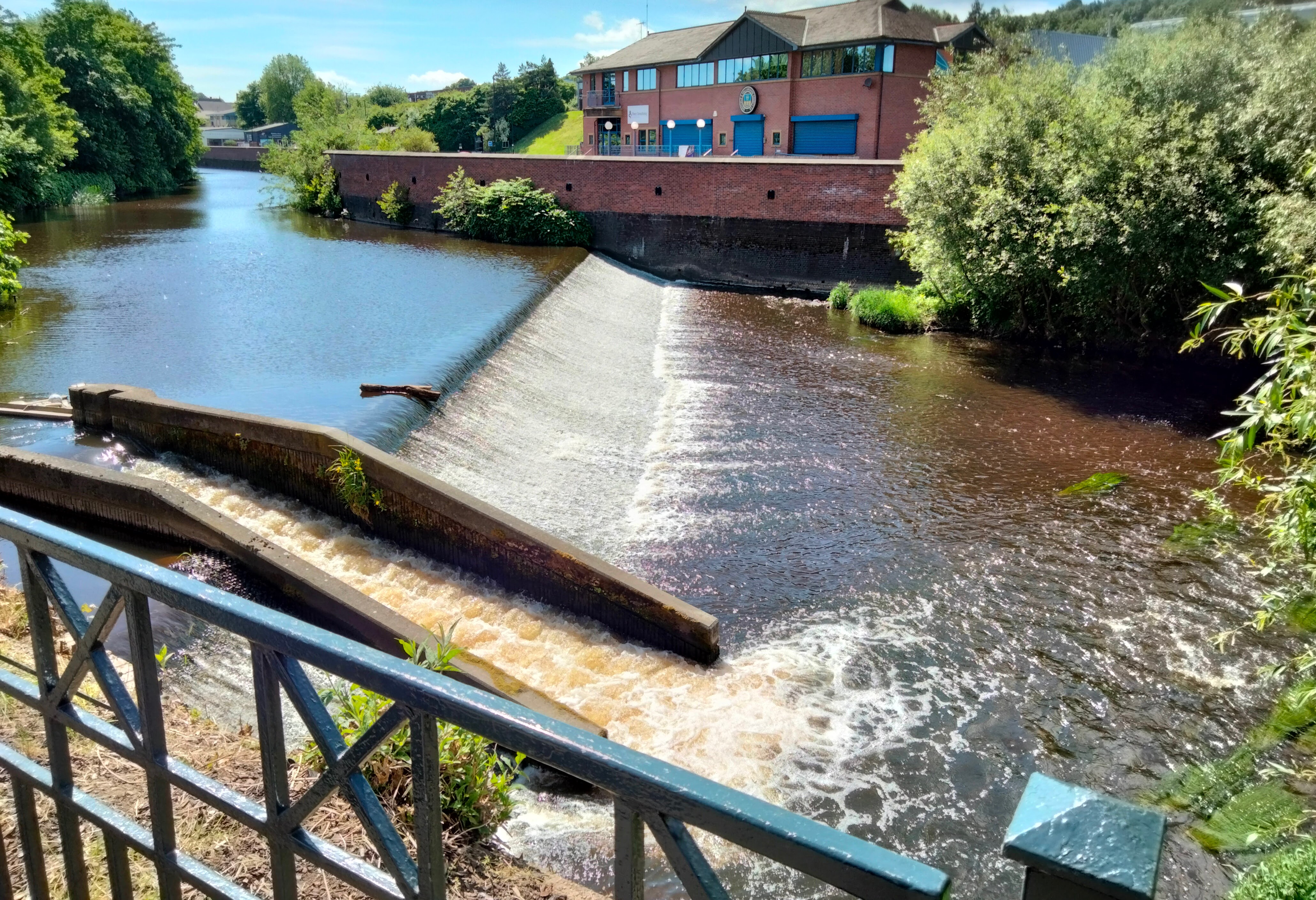
Hadfield’s Weir

Turning a corner onto Weedon Street, another unexpected place appears – Rag’n’Bone Sheffield, an arty, bohemian cafe, in what used to be a monumental mason’s yard! https://www.facebook.com/RagnBoneSheffield/ It would be rude not to stop off here for a quick coffee/cake, look around and a quick writing session, but it’s so close to the start of our journey that it would be easy to get distracted, so we won’t linger too long, for fear of not reaching our destination.
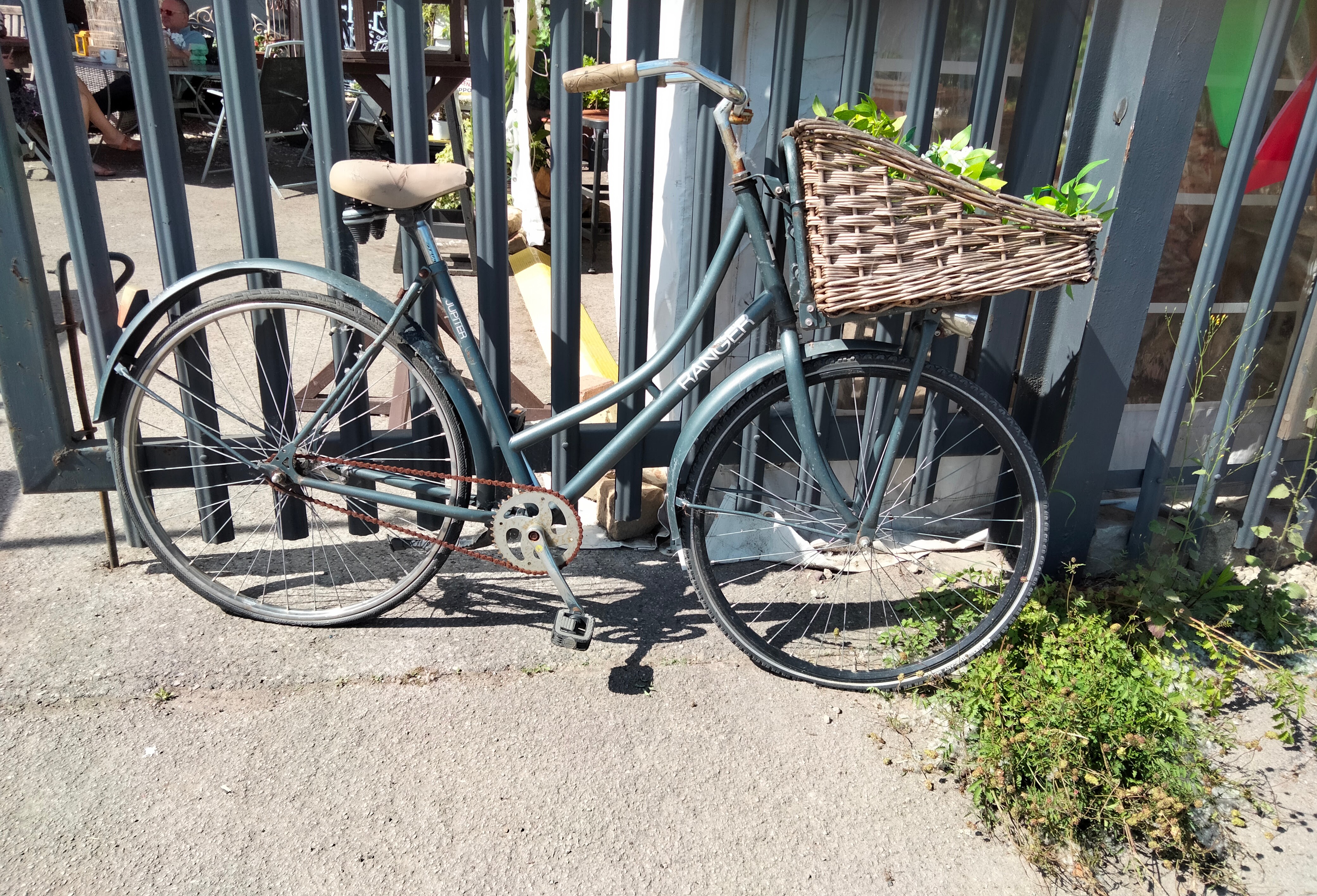
Rag ‘n’ Bones Sheffield

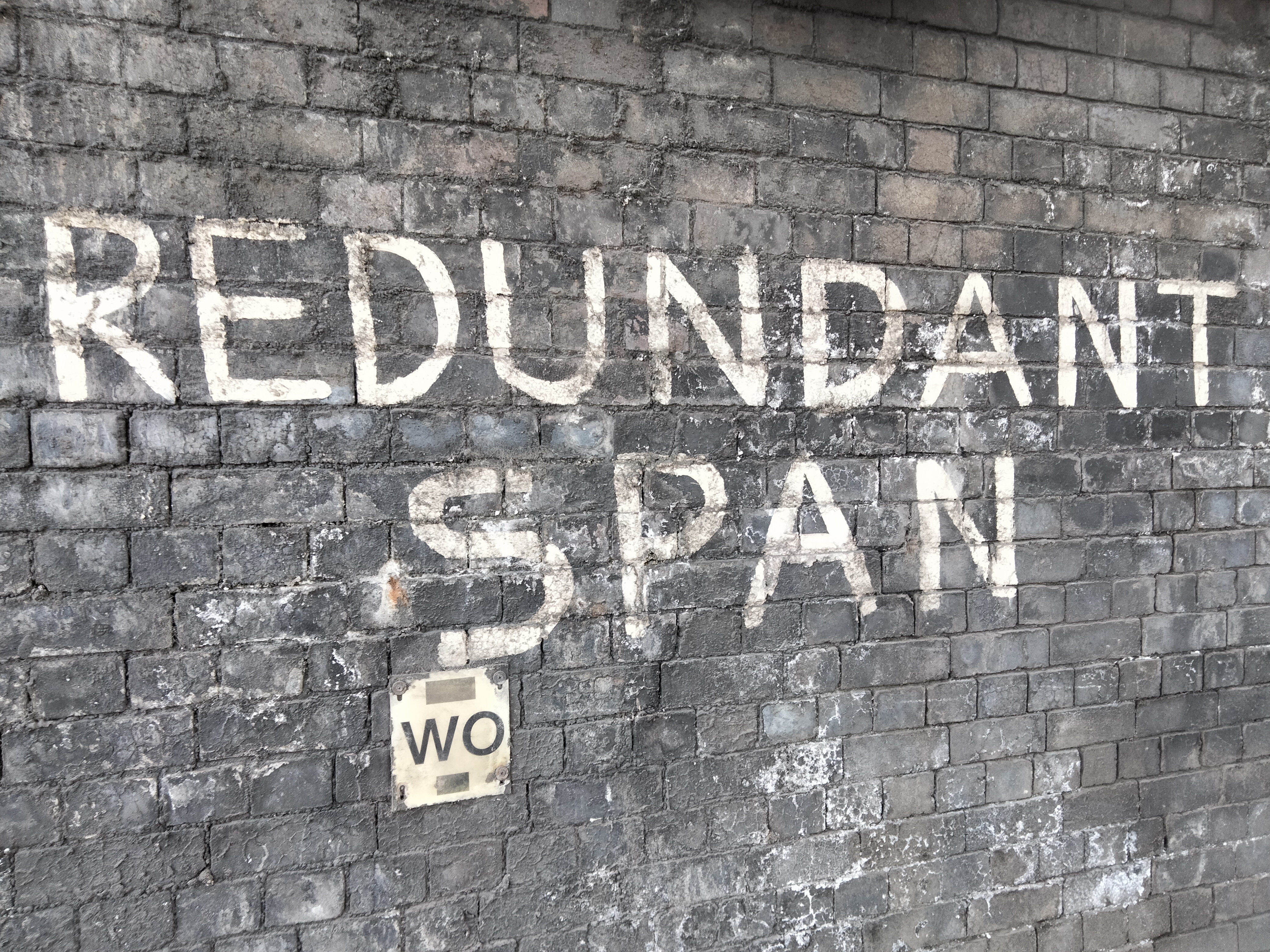
From here’s there’s a busy junction, familiar to anyone who’s ever driven to Meadowhall shopping centre, but even here are interesting historical details. The phrase “redundant span” written in official-looking paint on a bridge has led me to discover that the Brightside railway bridge we pass under is a disused bridge that goes nowhere these days. Colliery Road is blocked off to traffic and looks deserted and wooded, eventually disappearing into a spooky-looking tunnel under the railway. But we’ll carry on under the bridge towards the Crown Pub, turning left up Station Lane. It’s easy to imagine that this was once bustling with people travelling to and from work at the steelworks and foundries, but today it’s abandoned, apart from some flytipping.

It’s obvious that this was once the approach to a fairly substantial railway station, one you’ll whizz through if you catch a train to Meadowhall Interchange, Rotherham or Leeds. The bridge over the railway lines is open, but the steps leading down to the old platforms at Brightside Station have been removed and blocked off, adding to the eerie atmosphere. The station has been closed since 1995.
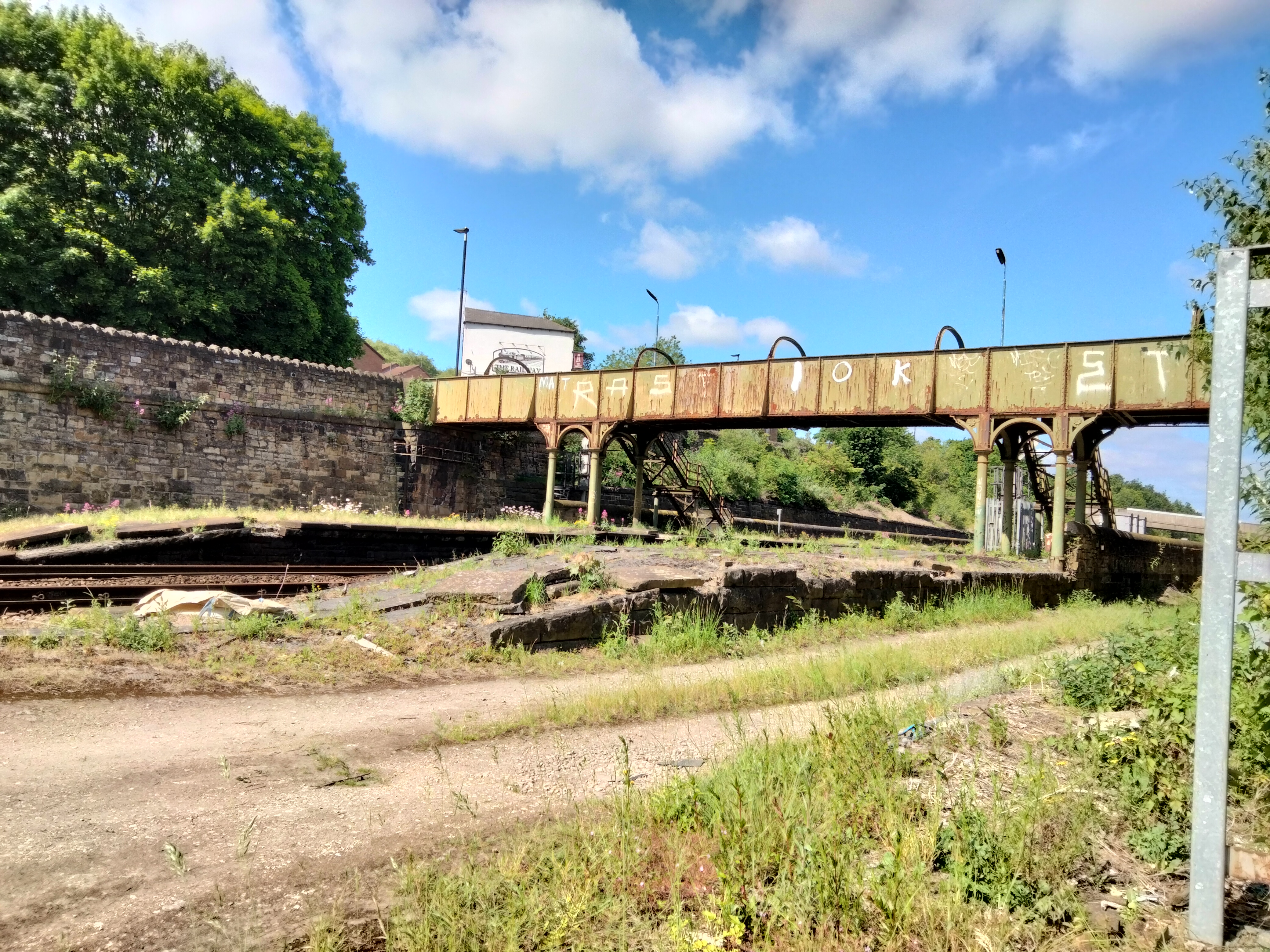
Across the road, the Railway Pub looks inviting, but we need to keep walking! Crossing the road and following the path at the side of Holywell Road, there’s a magnificent view of Sheffield Forgemasters steel works. The other side of the road is deeply wooded, with wild roses growing everywhere. It’s the perfect Sheffield contrast. After a couple of minutes, we’ll reach the Brightside Colliery Memorial, a tribute to the miners who died in accidents in the nearby mine that closed in the 19th century.
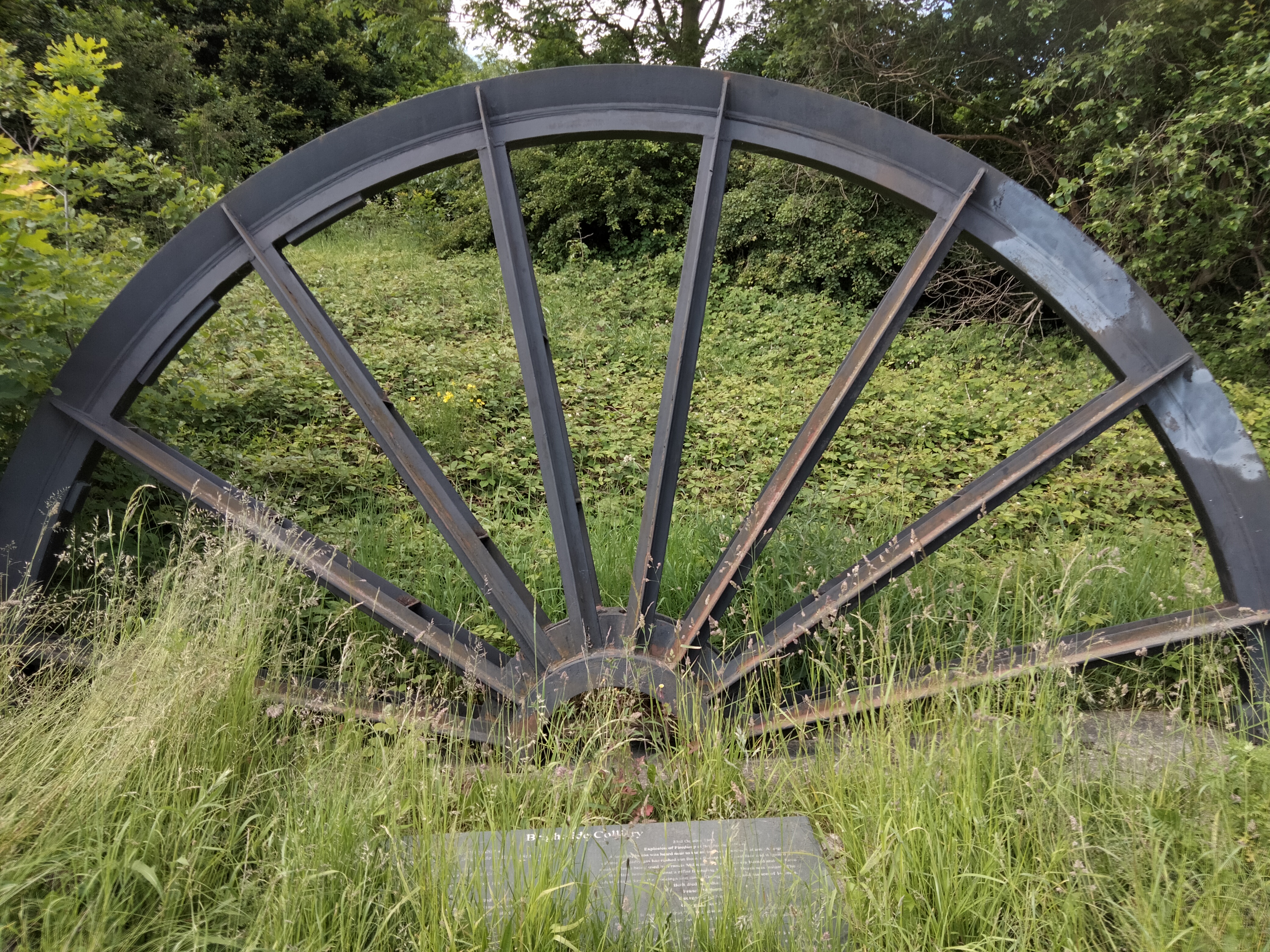
Brightside Colliery Memorial

From here, there’s a path that runs steeply up a wooded embankment, emerging into Beason Way Open Space, a lovely meadowy space, through some more woods, into another field and up a steep path, emerging around the back of some lock-up garages! From here, we take a turn into suburban Sheffield on Beacon Way and Wincobank Lane, and this is where our wild adventure really begins.

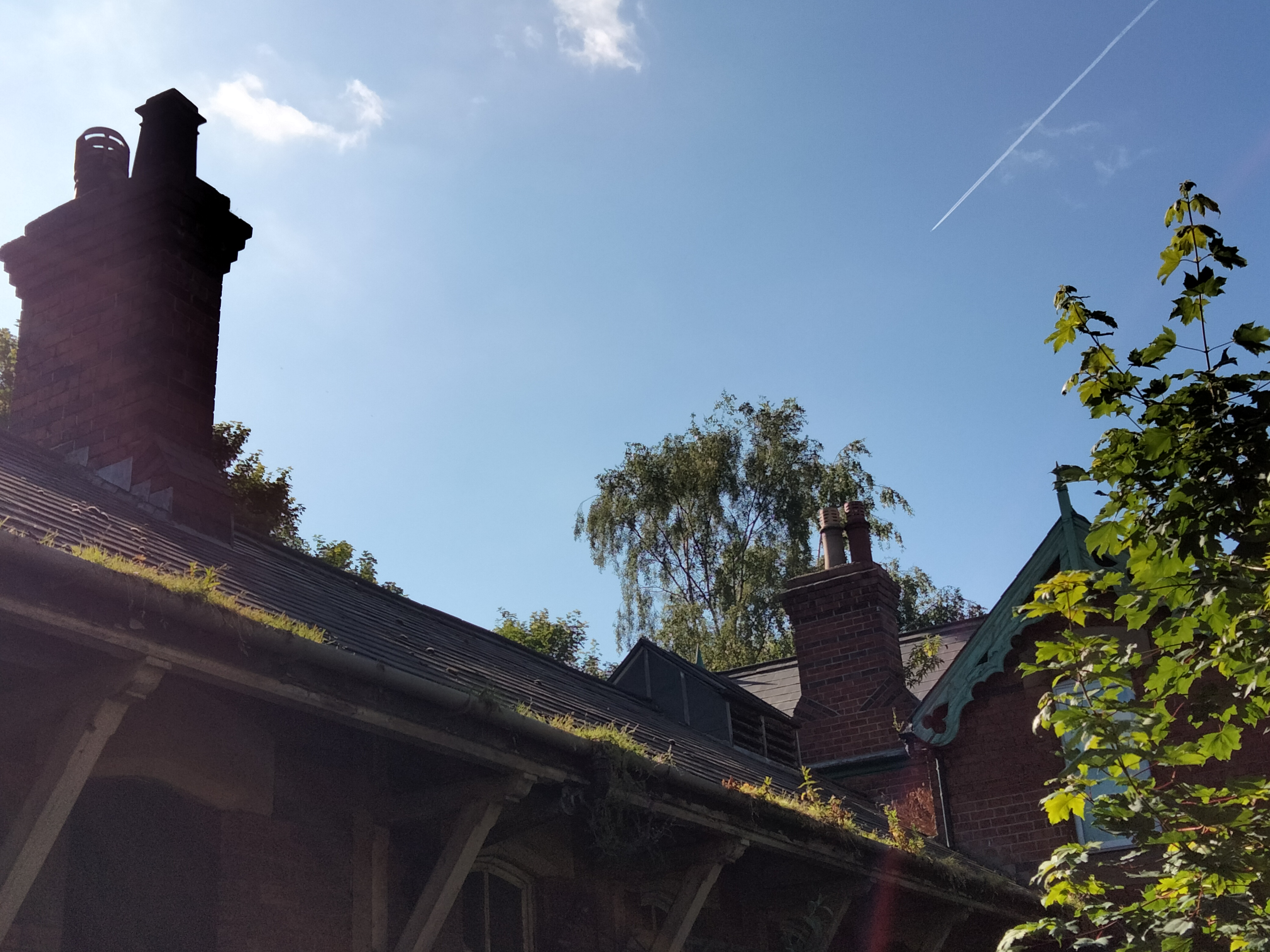
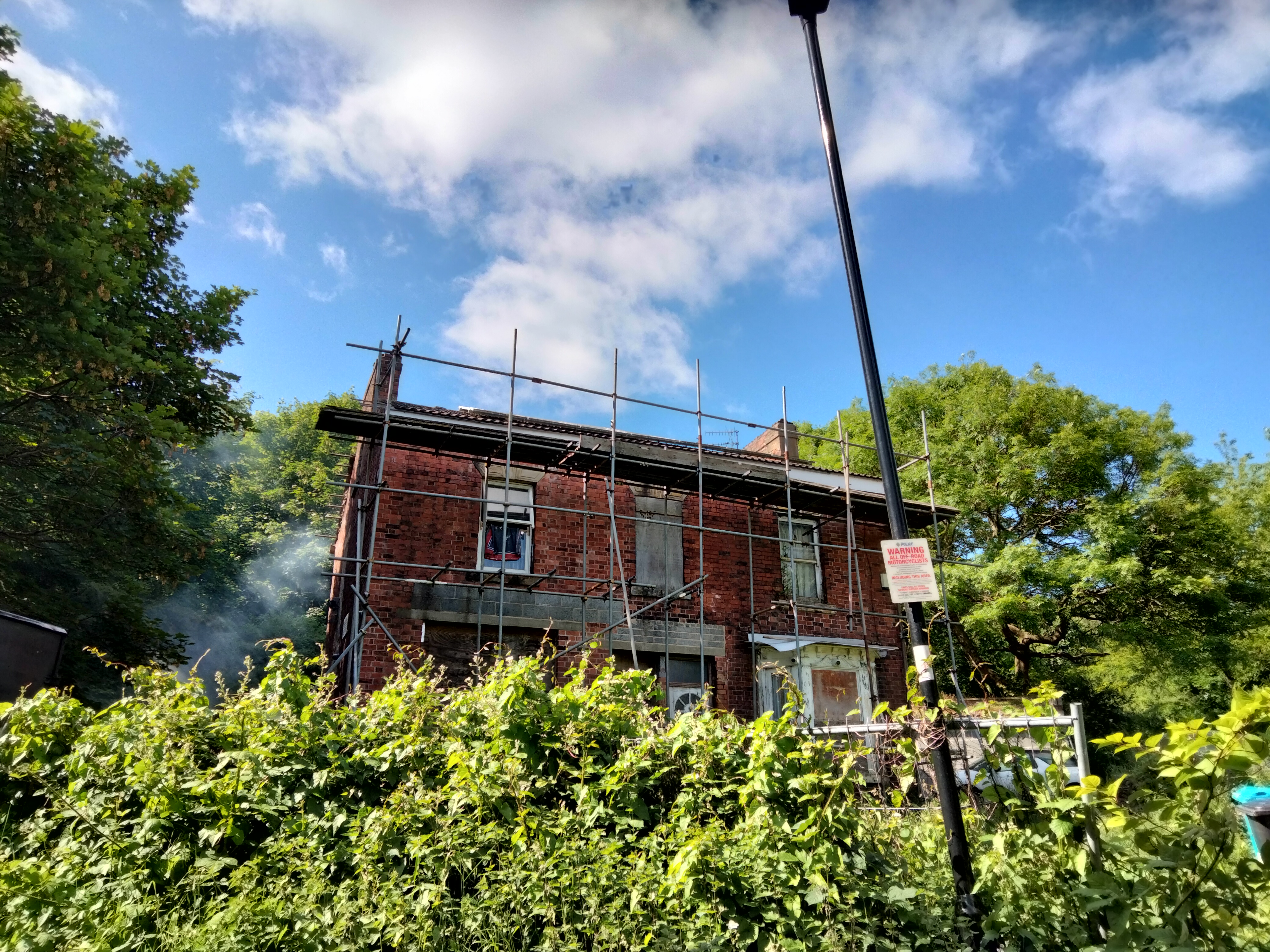
There’s a spooky old house that looks abandoned, apart from smoke rising from a brazier in the overgrown garden. Someone seems to be doing it up – but very slowly. When it’s finally restored back to its Victorian glory, it will be beautiful. On one side of the road is a cluster of Victorian terraced houses, on the other side, ancient forest, rising upwards in the only steep hill for miles.
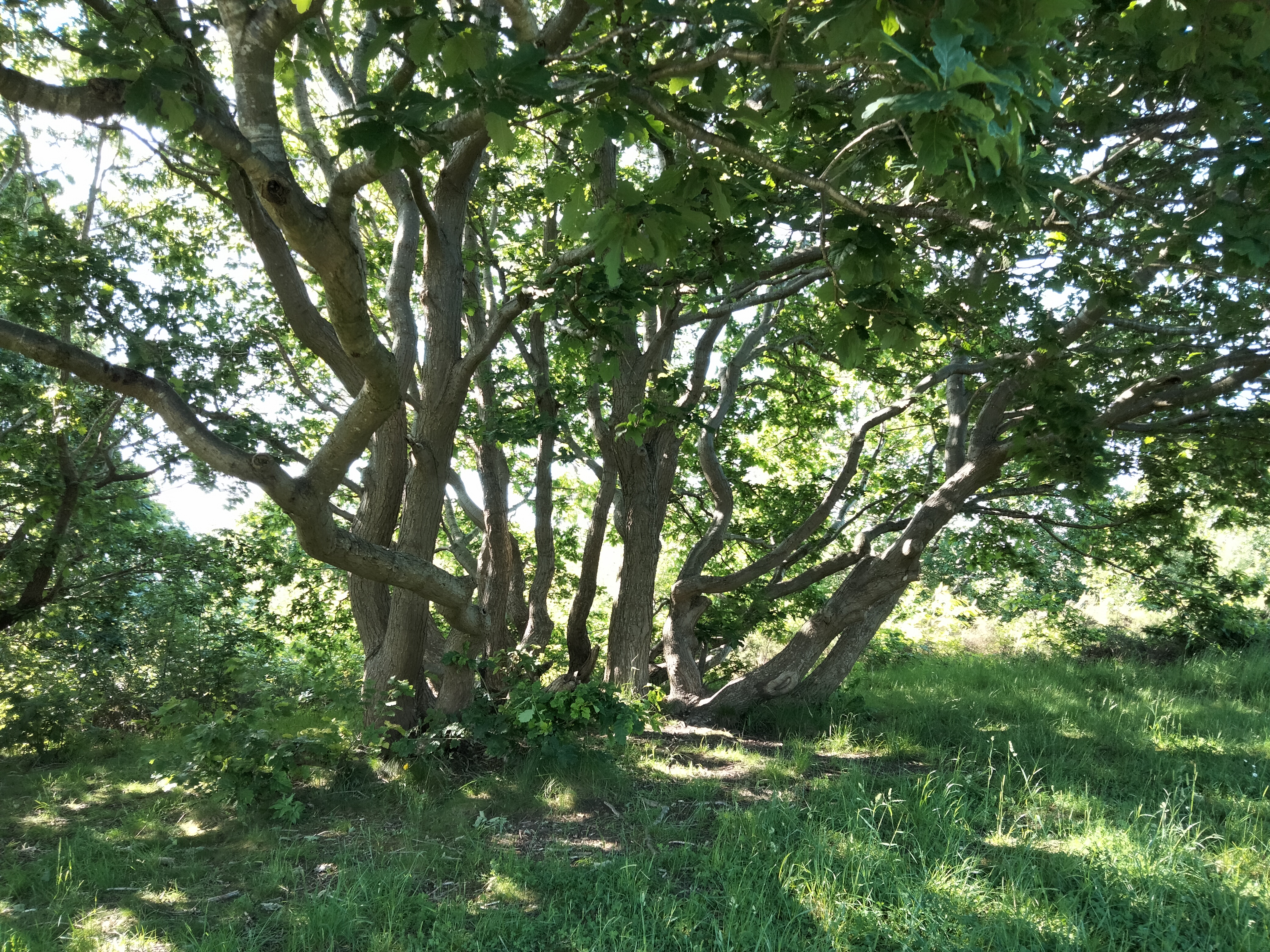
Following the path uphill through the trees, the modern world quickly falls away. This forest is a small glimpse into what Sheffield must have been like when it was part of Sherwood Forest, hundreds of years ago. But the history goes back further than that – to the pre-Roman Brigantes tribe of Britain, who built a fort here around 500 BC.

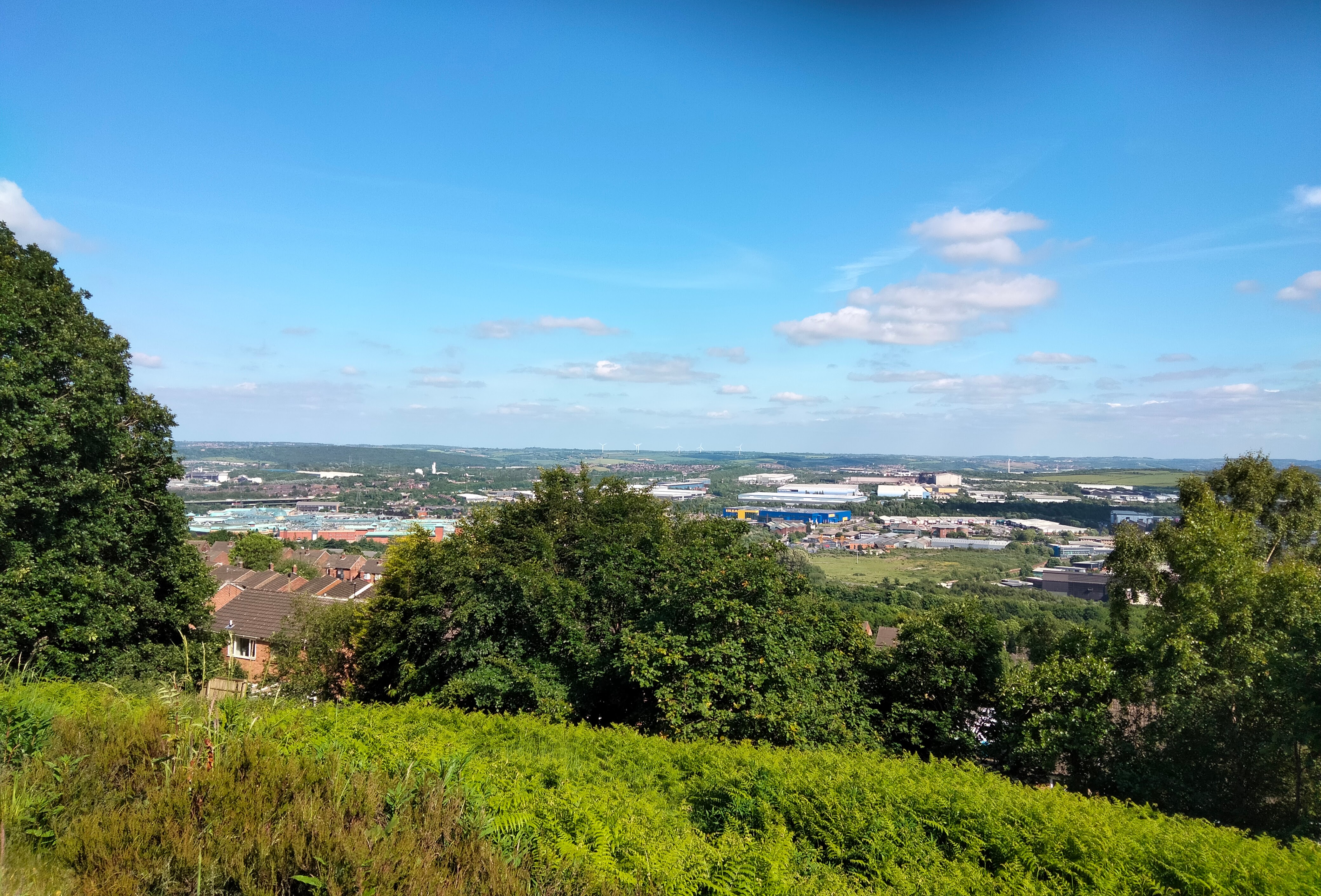
The steep stony path through the trees may go back to Roman times, certainly medieval people would have used it, and it leads straight to the top of the hill. The view over towards the north and west of Sheffield is stunning, and the outlines of the hills are unchanged for centuries. That’s what I like about Sheffield so much – you can always see trees and hillsides!

Right at the top, there’s an open area, brimming with plant life, where you can see the fort’s ditches, and this is another great viewpoint – in modern times, over to the M1 bridge at Tinsley, Meadowhall and the Ikea. You can see why the Iron Age tribespeople would have found this hill so special. On our walk, this is where we’ll stop for some lunch and to take time to write about the walk so far and the beautiful setting.

Just beyond this point is the site of a World War Two machine gun turret, and the path that runs downhill over the ridge from this point has been carefully cobbled in bricks, probably dating from the World War Two era. Then the path emerges onto Jenkin Road, one of the steepest roads in Sheffield, and world famous for being used for the Tour De France tour of Yorkshire in 2014.

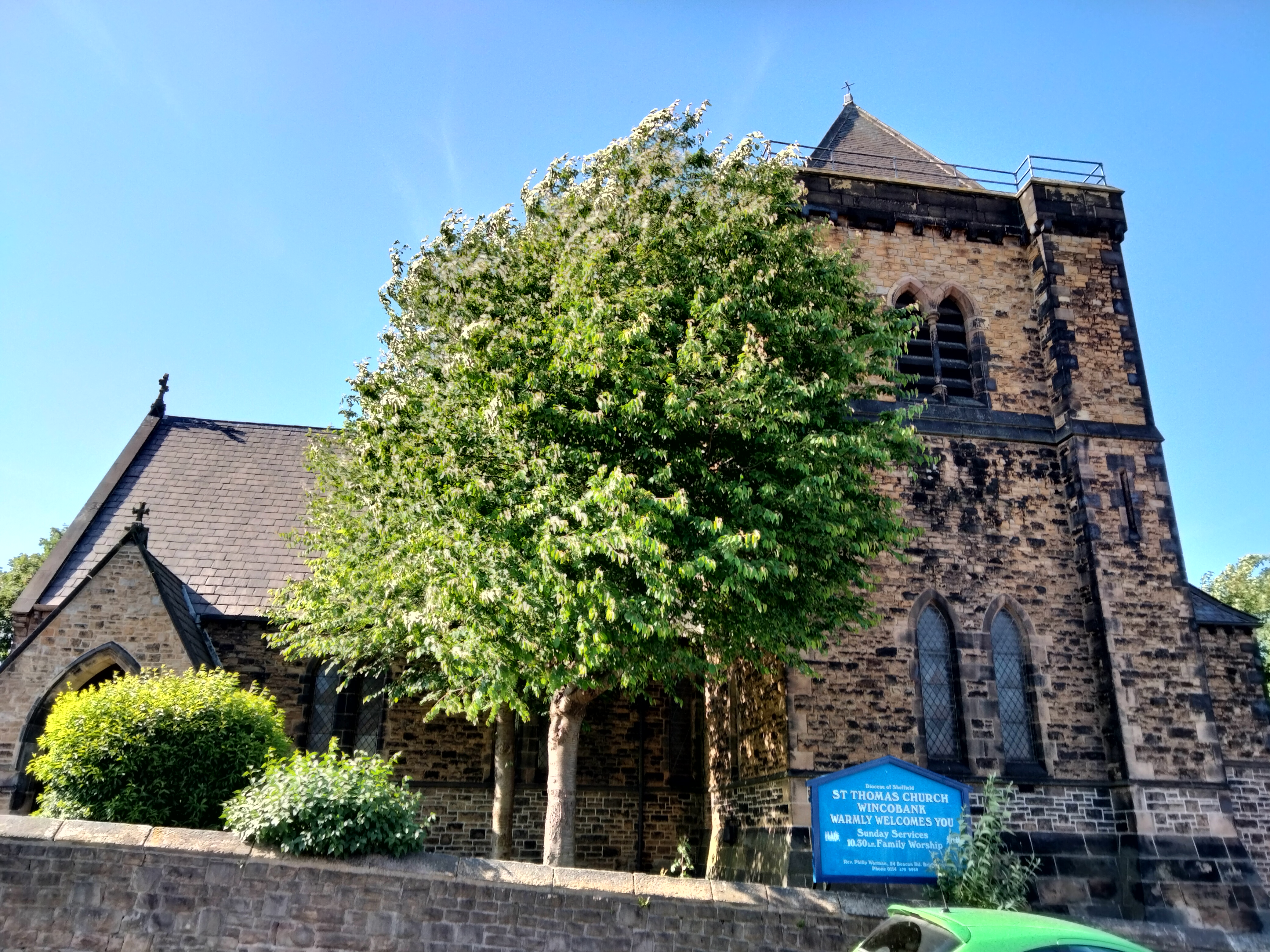
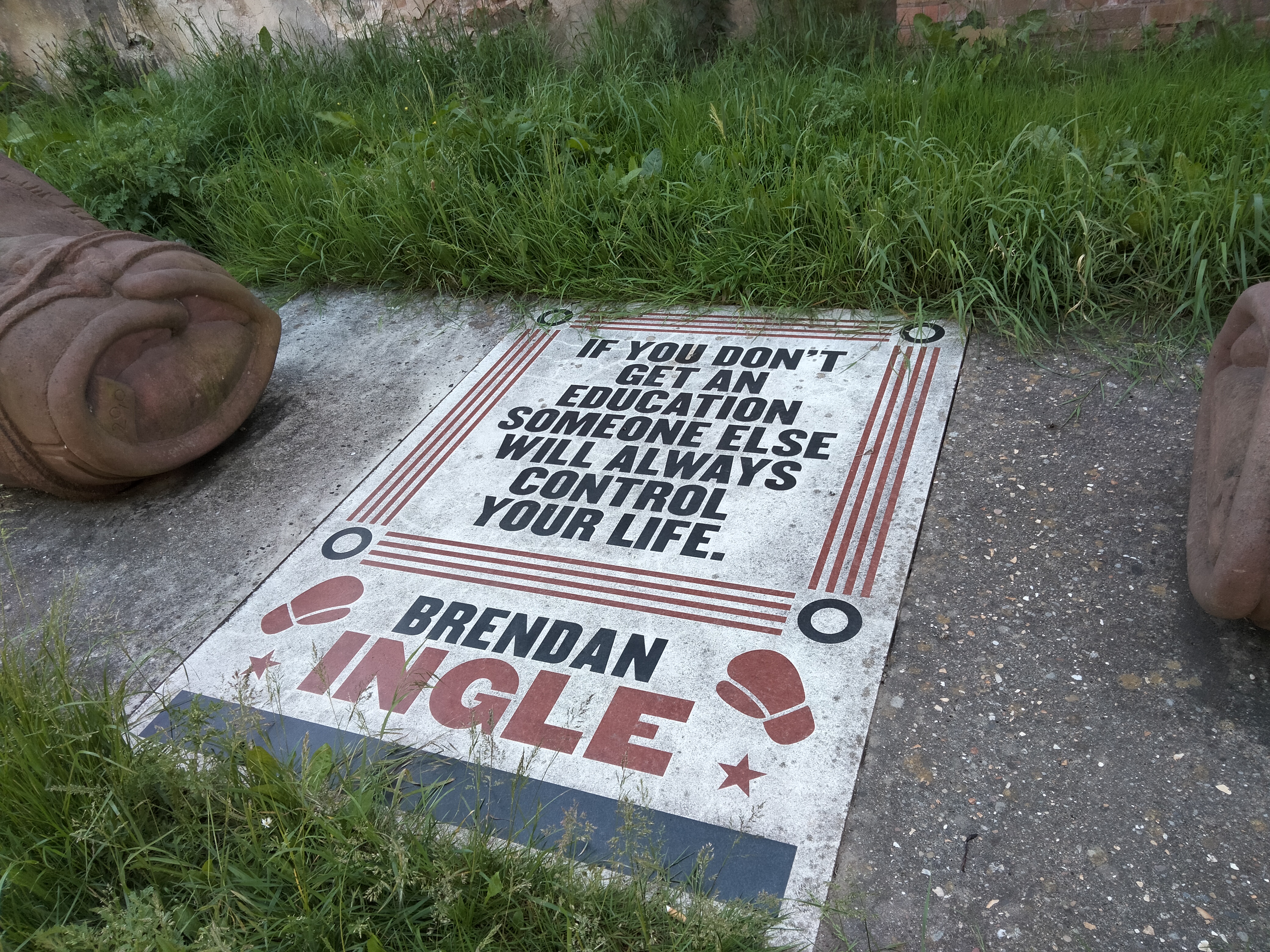
From here. the path runs through Wincobank Community Woodland, and it feels miles from anywhere, but it soon emerges into urban Sheffield again. There’s a real sense that Wincobank is a village – with its own village hall and Victorian Church. This road has also had a brush with international fame, as the home of Brendan Ingle‘s boxing gym, which I once visited long ago as part of an old job, and met the legendary man.

At the bottom of the street, turn left, under a bridge with some intriguing post-industrial wasteland on both sides, the end of the walk come in sight in the form of the old railway track transformed into a smooth path, the Blackburn Valley Trail, that leads us straight back to Meadowhall Interchange.

But there’s some more intrigue – emerging onto the path is the unmistakeable wooden rooftop of a Victorian country railway station – the former Meadow Hall station. It’s been closed to passengers since 1953, but it still has an evocative atmosphere, particularly surrounded by deep summer vegetation.
I hope I’ve given you an enticing taste of what this walk has to offer! I hope I haven’t spoiled any of the surprises, and I hope you find it inspiring. See you on Saturday!

Don’t let the past ruin your life. Remember it. Use it. Find a way to move on.

I was so shy, I had to hide inside this tree! Check out the mullet! I'd just started secondary school when this photo was taken.

I was so shy, I had to hide inside this tree! Check out the mullet! I’d just started secondary school when this photo was taken.

I’ve been thinking a lot about bullying recently. I’ve been working in schools and talking to young people. It still seems that school staff struggle to stop bullying and the effect it has on the self-esteem of their victim. Despite their best intentions, it’s sometimes very difficult to separate playground squabbles and everyday disputes from something more worrying.

As a newly self-employed person, making a lot of new connections and creating my own opportunities, there’s a lot of pressure to be confident and bold. Most of the time, I manage to be comfortable with myself, and some great things have happened to me over the last few months. But there are times when I feel that I’m holding myself back – that self-doubt is creeping in and that negative voice in my head tells me that I’m worthless.

Sometimes it doesn’t help to hark back to the past. But sometimes it can be useful to examine what happened; what changed; how I survived – and thrived!

Bullying is all about psychology. A child more likely to be bullied is often more insecure to begin with. As an only child, I wasn’t used to the rough and tumble of sibling arguments and the back-up of a close family unit. My parents may have over-protected me slightly, as they didn’t have any other children to worry about. I was naturally independent and imaginative, apt to day-dream (some things never change!), but maybe lacking the social ease of others and the confidence to join in with playground games. I remember wandering around the playground on my own at primary school in Kendal in the Lake District, complaining to the dinner ladies that no one would play with me.

In reality, I was okay. I had some good friends at that school, even though my best friend Michael Jackson (yes, we all thought it was really cool that he was called Michael Jackson, even Michael himself) moved to the Isle of Wight. At home, Russell from next door but one played out with me and an extended gang of kids on the back streets, getting into scrapes like making bows and arrows and firing them at car tyres (don’t worry, the arrows were just made of twigs!) and climbing into the gas works and making a den in some coiled-up pipes. I was a tom-boy, despite my parents worrying about my safety constantly and not letting me watch Star Wars. I probably was bullied occasionally but I had a bit of an attitude and I could give as good as I got.

When we moved to Derby, things changed. I joined Portway Junior School mid-way through Second Year Juniors (Year 4 nowadays). The school was run in a bizarre fashion, by a very eccentric head teacher called Mrs Shaw who seemed to think it was a public school (a private school!) The boys had to wear short trousers, even in winter, and I had to go from wearing whatever I liked, to a proper school uniform with a tie, and a red and white stripy dress in summer. We even had to do proper joined-up handwriting with fountain pens. The desks were the old-fashioned wooden kind with lids that lifted up and inkwells. I was used to a much cosier, modern school. And here I was, stuck in a “posh” suburb of Derby. The head teacher looked down on people like me, who lived in the part of Allestree near the school, which was still nominally a council estate, albeit a very leafy one!

In my first week, I made a fatal mistake. A plump, blonde girl sat next to me, smiled and gave me a novelty rubber. Most kids collected novelty erasers in the mid-eighties, shaped like various objects and scented. I kept mine in an old ice cream tub. She gave me one shaped like a teddy bear. Soon after that, I stuck up for her in the playground when a tough-looking girl was picking on her, and my fate was sealed. It turned out that the girl who’d been kind to me was a social pariah. She did her own thing and didn’t seem to care what people thought of her, even though she could behave rather oddly at times, trying to kiss ants in the playground. The tough-looking girl lived in our cul-de-sac and all her cousins and brothers played out there too, taunting me as they rode around on their bikes, and once even throwing stones at our front door. So no playing out for me after that. It took me until my mid-teens to dare to walk to the end of the road, rather than running through the “gitty” at our end of the cul-de-sac, hoping that I wouldn’t run in to the bully or any of her family.

But at least she was honest about being a bully. It was the snobby kids, who got their school uniforms from Next; whose parents were estate agents, and who were invariably picked to be prefects and lunch monitors. The lunch monitors were the amongst the worst. Rather than a canteen system where children could pick what they wanted, we were forced to sit at the same table every time, where some incredibly stuck-up, bossy child would dole out inedible luncheon meat, greasy chips and mushy peas that were actually so dry they had cracks in. If you didn’t eat every morsel, with a wilful effort not to be sick, holding your nose so you couldn’t taste anything (or at least that was the idea), then the lunch monitors would “tell on you”. Looking back, I can’t imagine the sort of child who would willingly volunteer for a job like that, unless they were power-hungry and enjoyed humiliating other people. They’ve probably got top jobs in management now!

Nasty things were whispered about me (for example that I had AIDS!!!), because I continued to stick up for my only friend. I started to think there was something wrong actually with me. Surely I didn’t smell? Was I hideously ugly? The only thing that made me different was that I wasn’t a snob and I wasn’t “rough”, as my mum would say. As a teacher’s daughter, I had my grammar corrected all the time! I didn’t know where I fitted in, and it didn’t help that by the time I went up to Secondary School, I was five feet and four inches tall, with size six feet –already the same size I am now! My confidence was at rock bottom, and I had a mullet hairstyle. It was 1988 though, so maybe I wasn’t the only person who’d been given that hairstyle at the unisex hairdressers.

Woodlands Secondary school wasn’t much better. Most of the kids from Portway Juniors were there. Children from the other feeder schools were more ethnically and socially diverse, but I had very few friends – and only because we were left-overs. We clung to each other, while I gradually discovered that I was totally bored in their company. I fell in love with music, with bands like the Stone Roses. My only friend from Junior School was still obsessed by Kylie and Jason (this is way before Kylie was cool and Jason became a gay icon!) and her tiny bedroom was a confection of pink. Before long, I was listening to the John Peel show under my duvet and buying the NME. But I was very lonely and didn’t have anyone to share my new passions with.

When I started singing and playing the guitar, I got a lot of name-calling after my performances, and sometimes it felt unbearable. But I was also on the road to recovery. My form tutor was very understanding, and got me some counselling – I got some stick for that as well, but gradually, I was becoming stronger. My passion for music was stronger than my fear of the bullies.

The biggest turning point came when a new girl started in Year Ten. She was a couple of minutes late to our first GCSE History class. Of course the only spare seat was next to me, the social outcast. But the new girl just smiled and sat down next to me. Over the next two years, Kirsty and I became best friends. We were both imaginative, intelligent and unconventional.

Instead of makeshift friendship groups reluctantly associating together because we were the dregs who didn’t fit in, Kirsty seemed to bring everyone together: the talented but shy people; the classical musicians; the drama queens; the science geeks and the sporty clean-cut girls. We were proud of standing out; of being who we were. There were struggles along the way, but whenever bullies tried their luck, I had a real group of friends to back me up. And I backed them up in return.

By the end of Year Eleven, I was officially cooler than almost anyone else, because Kirsty and I – and another friend called Mary, were going to Glastonbury festival on our own – our first genuinely grown-up adventure. And since then, the only thing that’s stood in my way is my own fear; my own insecurity, whether it’s innate, or born out of the days when no one fought my corner.

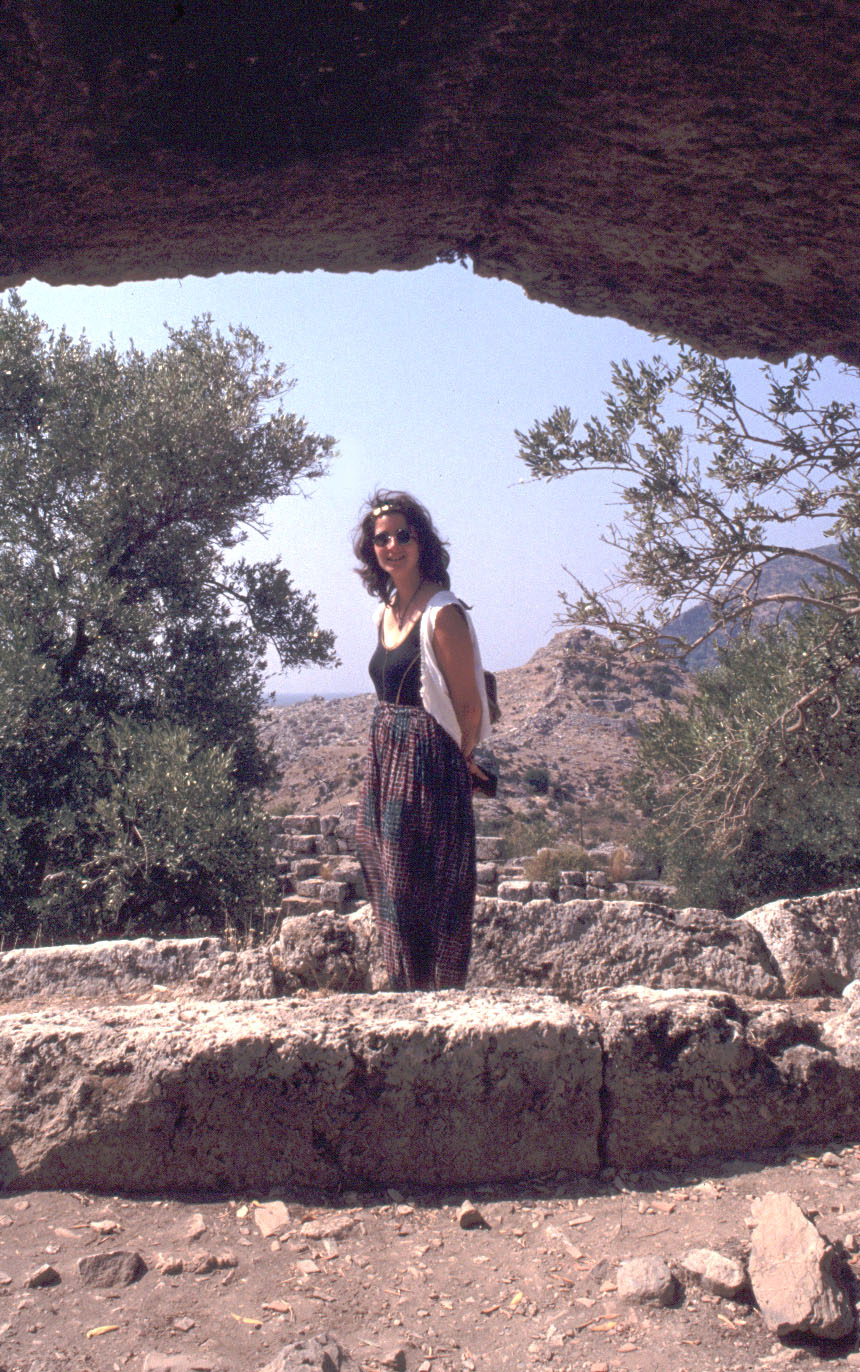
On holiday in Turkey, aged 16. How cool am I? I wish I had some Glastonbury photos from 1993 but I seem to have lost them!

On holiday in Turkey, aged 16. How cool am I? I wish I had some Glastonbury photos from 1993 but I seem to have lost them!

Toolkit for overcoming bullying – things I wish I’d known at the time but probably helped me through. This is written as if I was advising myself at the age of thirteen!

  • Be proud of who you are. Whoever you are, you are not a freak. There’s nothing “wrong” with you.
  • Don’t be afraid of being alone sometimes. Make the most of your time. Read a book, play a game, daydream, write, learn an instrument.
  • Don’t conform to fit in. Be proud of the music you like and your hobbies. That will make you a million times cooler than the bullies.
  • Don’t be afraid. Hold your head up high. Pretend you can’t hear the things the bullies are saying about you. Failing that, think of some put-downs and say them calmly, without sounding angry or upset.
  • Tell your teachers and your parents about bullying, and they’ll help. But the biggest struggle is actually with yourself. You need to start believing that you’re an amazing person and you can achieve great things.
  • Start doing great things: write songs and perform them in public; volunteer for interesting things that take your fancy! Don’t hide in the corner – follow your dreams!
  • Be patient. Great friends are just waiting around the corner. You’ll find your soulmates – eventually, you’ll have a whole circle of friends who are really cool, amazing people!
  • And just remember that bullies are really insecure people who get their kicks from making others feel small. Sometimes they come to their senses and change their ways. Don’t give them the satisfaction of letting them make you unhappy.
  • Making yourself happy is the best antidote to bullying!