Open Your Memory Box – thanks to everyone who took part!

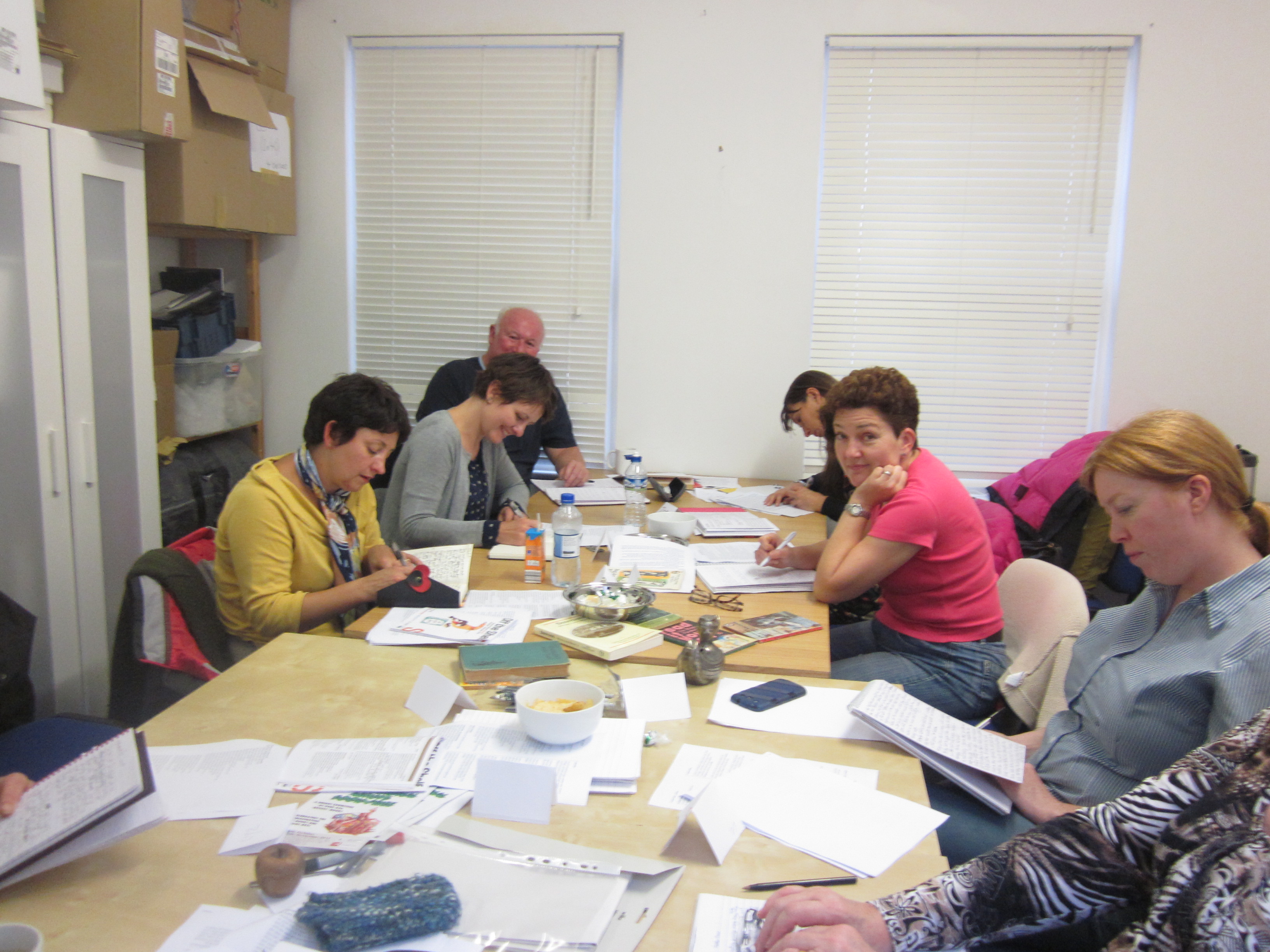
On a grey, rainy day, ten people (including me), had a fantastic time at Bank Street arts, writing and exploring on my Open Your Memory Box course. I wrote about it in a guest post for Writing Yorkshire – one of the first posts on their blog on their brand-new website! It’s very exciting. Over the next few weeks, I’ll upload some of the brilliant writing that was created in my workshop.

I was very proud to be contributing towards Sheffield’s Off the Shelf Festival of Words with my own course…for the very first time!

Open Your Memory Box Participants, hard at work!

Open Your Memory Box Participants, hard at work!

It was an action-packed day. We also watched a miniature theatre performance, the Ice Book, and attended the launch of Writing Yorkshire.

To read the blog post, follow the link below – and while you’re at it, sign up to the Writing Yorkshire Newsletter, which is always packed with information. Writing Yorkshire, previously known as Signposts, helped me to launch my writing business, and they continue to support me as my experience and expertise grows.

http://writingyorkshire.org/blog/

Have fun writing!

If you need help, get in touch with me about bespoke writing and editing work.

I’m also available to run writing workshops, specialising in memoir and personal writing.


Open Your Memory Box – and write!

Enrol on the course and start writing!

Enrol on the course and start writing!

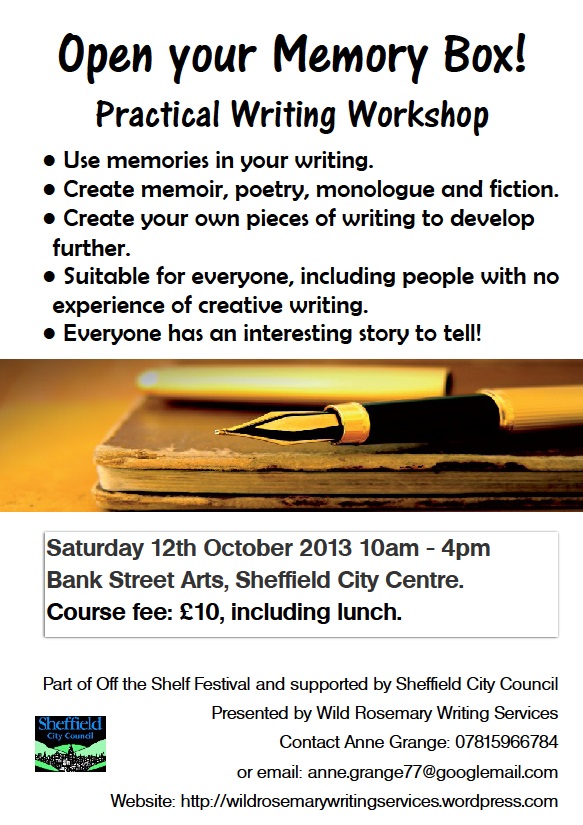
I’m running a writing workshop as part of Sheffield’s Off the Shelf literary festival. The aim of the workshop is for participants to produce their own pieces of memoir, poetry and fiction, using their own memories as a starting point.

Since my last workshops in May, I’ve been very busy honing my skills and developing new ideas. I’ve started a longer reminiscence course at Newholme Hospital in Bakewell. Last week, we used the theme of school days. I wrote a poem for the session, using memories of being stuck the most boring primary school assemblies ever at Portway Junior School in Derby.

Nowadays, assemblies are short and snappy, and led by children who have prepared something special based on a topic they have been learning about. My junior school days were only thirty years ago, but things have really changed. We had to sing never ending hymns with droning verses and choruses, terrible recorder recitals. The hymn books were covered in peeling blue plastic. When another teacher dared to suggest a hymn that was more fun to sing, the head-teacher used to rant in front of everyone. Her assemblies were usually diatribes against something she didn’t agree with. She used to make vegetarians sit on their own in the library to eat lunch. I would have preferred that, compared to the bullying lunch monitors and hideous luncheon meat that we had to force down!

To write the poem, I used memories from all five senses: the elaborate displays of work in the hall and the blue hymn books, the smell of warm rubber and those hated school dinners; the taste of blood from a scabby knee; the drone of the headteacher’s voice as I day-dreamed; and the feel of the cold parquet floor.

It was useful to remember, and a good exercise for my memory!

Assembly

An aroma of warm rubber rises from my plimsolls.
Sitting cross-legged, picking a scabby knee.
The new skin is sore and red but satisfying in its smoothness.
The scab bleeds a little at the edge and I lick my finger,
Metallic-tasting blood fizzing on my tongue.

The parquet floor is dusty, cold on bare legs.
A faint tang of floor polish and the ghosts of school dinners:
Khaki mushy peas and sweaty baked beans.
The headmistress rants about keeping up standards
Her voice becomes a monotone drone.

My legs turns twitchy, staving off numbness.
The teachers cast hawkish eyes up and down the rows,
Keeping watch for fidgets, whispers, pushes and shoves,
Sharp tugs on long plaits, bogies wiped on jumpers.
I dream, staring at a wall displaying a tree with paper leaves.

The monkeys swing and jump in the humid forest air.
The leaves rustle; wind in the branches. I open my eyes.
The others are standing, opening the scuffed blue books.
I’ve missed the hymn number. Fumbling the tissue-thin paper,
The dirge starts, heavy and tuneless to a pounding piano.

Full of words like:
Perseverance
Salvation
Cometh
Alleluia
Blood
Unclean
Eternal – just like this assembly – going on forever with no end in sight.

Anne Grange

Memories of Sutton on Sea

I’ve recently been running some reminiscence sessions at Newholme Hospital in Bakewell, writing short pieces to read to the patients and creating “slideshows” of photographs. The first session was on the theme of holidays, so I wrote about childhood holidays at Sutton on Sea. I may have embellished a few things, but when you’re writing memoir, it’s okay to run events together and use details for effect – the piece of writing needs to be accurate, but it also needs to be entertaining, and I hope that you enjoy my article!n I’ve kept the tone quite light and informal.

Writing this article has also given me the chance to dig out family photos of our Sutton On Sea holidays. It looks like we had a lot of fun – and all we needed was the sea and sand (and sometimes, some sun!)

When I was seven, me and my mum went camping with my grandparents for the first time. Every summer, Nanny and Gardan (our family name for Grandad) towed their caravan to Sutton-on-Sea, a quiet seaside town in Lincolnshire. They were members of the Camping and Caravanning Club, and the Nottinghamshire District Association (always just called the Notts D.A.) hired a massive field for the whole summer holidays. The only facilities were standpipes for water and large holes dug in the ground for the waste from the chemical loos.

Nanny and Gardan invited their three daughters and their families, and we were also surrounded by Nanny and Gardan’s oldest friends and their kids and grandkids too. There were always lots of children to play with.

In Kendal, Mum woke me up in the pre-dawn darkness, and we packed our ancient turquoise Mini. The journey was exciting – Lincolnshire was a long way away. When we reached the county, it was really flat, with big fields stretching out to the horizon.

It was lovely to see Nanny and Gardan and after sandwiches on tasty white bread and cake, we put up the small ridge tent we’d borrowed. There was just enough room for our Lilos, snug in our sleeping bags, and if it was cold, an enormous thick green blanket, which Gardan called his “hoss” blanket. My mum had already explained that “hoss” meant horse and “noss” meant nurse! I loved Gardan’s Nottinghamshire accent but Mum and Dad had lost their accents at college, when you had to “talk proper” to get anywhere in life. Sometimes I didn’t know what Gardan was saying but he was always joking about and doing magic tricks.

Nanny was kind and practical. Everything she cooked tasted delicious and she was very talented at embroidery, despite an incredibly impoverished childhood. She did have a wicked sense of humour though and liked a good gossip. Together, my grandparents could make anything.

Nanny and Gardan hired a chalet for the weeks when their grandchildren would be visiting. The beach had a row of brightly painted wooden chalets, stretching in either direction as far as the eye could see. The concrete promenade and sea defences felt warm and smooth under my jelly shoes. The chalets were basic, just a few moth-eaten armchairs, a gas stove and a few tatty ornaments, but they were very handy to get warm and change after a swim in the sea or a change in the weather. The tide came right in every day, and the sand was moist and yellow, brilliant for making sandcastles. Gardan buried our legs in the sand and sculpted mermaids’ tails for me and my cousins. He’d get us all creating elaborate racing cars and palaces in the sand, before the tide came in and we had to run into the chalet. To warm us up, my uncle had a “job lot” of MaxPax drinks from work, stacks of paper cups with powdered drinks at the bottom. The tomato soup was alright but the oxtail was disgusting. I liked the orange squash but it still tasted slightly powdery and chemical.

The sea was fairly safe to bathe in. My mum always made sure we were well supervised, and I swore solemnly to never take an inflatable on the sea as I could get swept out and drowned, or would have to be rescued by the lifeboat. The sea didn’t go out that far, so it was always easy to run back to the promenade. I was still learning to swim but I managed a few metres of breast-stroke. Once or twice, a wave crashed right over my head and went up my nose but it was a good excuse for MaxPax hot chocolate and being wrapped snugly in a towel.

There was an outdoor paddling pool near the seafront, in the shape of a maple leaf as it had been donated by the Canadian Government after the disastrous East Anglian floods on 1952. Paddling, the ice-creams bought from the pool and the coin-operated go-carts, were the highlight of excitement in Sutton-on-Sea apart from the jumble sales for the Lifeboats. On sunny evenings, we would walk about a mile down the prom to Mablethorpe (although it felt like a really long way at the time). The chalets continued almost all the way, sometimes smart, sometimes peeling and shabby, but all with names like “Sea-spray”, “Beachcomber” and “Sunny Days”. There were sand dunes too. On our evening walks, we also discovered a cluster of pretty houses which turned out to be made from old railway carriages.

Mablethorpe was a small seaside resort, a bit more lively than Sutton-on-Sea. There were slot machines and a small fairground. Some of the games in the arcade were already museum-pieces, like the bagatelle where shooting ball-bearings into the correct holes gradually turned round puzzle pieces which made up a black and white picture of Mablethorpe in the 1950s. I’d saved up coppers for the penny falls and Gardan showed me the best techniques for pushing the pennies off the moving shelves inside the machines.

There were shops selling sticks of rock, candy floss and toffee dummies. My mum was usually very strict about sweets, but I chose a giant lollipop which I could wrap back up when I wanted. I made it last for hours.

My teenage cousins moaned about how “lame” and “crap” the funfair was, but I loved it. Bright flashing lights, loud music and dazzling colours are something I’ve loved ever since. We also made a special day-trip to Skegness, more recently christened “Skeg-Vegas”, a name that’s only slightly ironic as it’s loud and brash, with bingo halls, amusement arcades and a really cool fair – except my cousins still thought it was “crap”.

Back in Sutton-on-Sea, we’d have fish and chips at Waldo’s, where the fish was about a foot long, perched on top of masses of golden chips with batter “scraps” on top, eaten on the seafront or walking slowly back to the campsite.

We went to Sutton-on-Sea every year until I was eleven. That last summer broke the spell. I’d had a brilliant time with my cousins and other kids but then they all went home and I spent the last few days moping about by myself. It was cold and rainy. That year, my grandparents fancied going to Cleethorpes instead of Skegness. The town seemed grey and miserable. There were some chair-o-planes on the seafront, but I looked desperately for a funfair, only to glimpse it thought closed gates, closed and abandoned. It rained and nanny and my mum decided to catch a train to Grimsby to look around Marks and Spencer. I was bored to death. I’d been promised thrilling rides and flashing lights, and there they were discussing the merits of various cardigans.

I’ve only been back to Sutton-on-Sea once since we stopped going there on holiday. It hasn’t changed much. Apparently the arcade in Mablethorpe still has the really old amusements. Those times were spent as part of a large extended family, being known as “our” Anne, with various adults looking out for me but allowing me to run around on my own and make friends. The feeling of belonging and freedom is something I’ve yearned for ever since.

Don’t let the past ruin your life. Remember it. Use it. Find a way to move on.

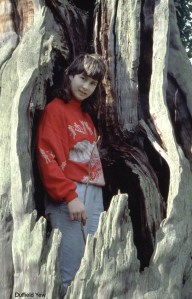
I was so shy, I had to hide inside this tree! Check out the mullet! I'd just started secondary school when this photo was taken.

I was so shy, I had to hide inside this tree! Check out the mullet! I’d just started secondary school when this photo was taken.

I’ve been thinking a lot about bullying recently. I’ve been working in schools and talking to young people. It still seems that school staff struggle to stop bullying and the effect it has on the self-esteem of their victim. Despite their best intentions, it’s sometimes very difficult to separate playground squabbles and everyday disputes from something more worrying.

As a newly self-employed person, making a lot of new connections and creating my own opportunities, there’s a lot of pressure to be confident and bold. Most of the time, I manage to be comfortable with myself, and some great things have happened to me over the last few months. But there are times when I feel that I’m holding myself back – that self-doubt is creeping in and that negative voice in my head tells me that I’m worthless.

Sometimes it doesn’t help to hark back to the past. But sometimes it can be useful to examine what happened; what changed; how I survived – and thrived!

Bullying is all about psychology. A child more likely to be bullied is often more insecure to begin with. As an only child, I wasn’t used to the rough and tumble of sibling arguments and the back-up of a close family unit. My parents may have over-protected me slightly, as they didn’t have any other children to worry about. I was naturally independent and imaginative, apt to day-dream (some things never change!), but maybe lacking the social ease of others and the confidence to join in with playground games. I remember wandering around the playground on my own at primary school in Kendal in the Lake District, complaining to the dinner ladies that no one would play with me.

In reality, I was okay. I had some good friends at that school, even though my best friend Michael Jackson (yes, we all thought it was really cool that he was called Michael Jackson, even Michael himself) moved to the Isle of Wight. At home, Russell from next door but one played out with me and an extended gang of kids on the back streets, getting into scrapes like making bows and arrows and firing them at car tyres (don’t worry, the arrows were just made of twigs!) and climbing into the gas works and making a den in some coiled-up pipes. I was a tom-boy, despite my parents worrying about my safety constantly and not letting me watch Star Wars. I probably was bullied occasionally but I had a bit of an attitude and I could give as good as I got.

When we moved to Derby, things changed. I joined Portway Junior School mid-way through Second Year Juniors (Year 4 nowadays). The school was run in a bizarre fashion, by a very eccentric head teacher called Mrs Shaw who seemed to think it was a public school (a private school!) The boys had to wear short trousers, even in winter, and I had to go from wearing whatever I liked, to a proper school uniform with a tie, and a red and white stripy dress in summer. We even had to do proper joined-up handwriting with fountain pens. The desks were the old-fashioned wooden kind with lids that lifted up and inkwells. I was used to a much cosier, modern school. And here I was, stuck in a “posh” suburb of Derby. The head teacher looked down on people like me, who lived in the part of Allestree near the school, which was still nominally a council estate, albeit a very leafy one!

In my first week, I made a fatal mistake. A plump, blonde girl sat next to me, smiled and gave me a novelty rubber. Most kids collected novelty erasers in the mid-eighties, shaped like various objects and scented. I kept mine in an old ice cream tub. She gave me one shaped like a teddy bear. Soon after that, I stuck up for her in the playground when a tough-looking girl was picking on her, and my fate was sealed. It turned out that the girl who’d been kind to me was a social pariah. She did her own thing and didn’t seem to care what people thought of her, even though she could behave rather oddly at times, trying to kiss ants in the playground. The tough-looking girl lived in our cul-de-sac and all her cousins and brothers played out there too, taunting me as they rode around on their bikes, and once even throwing stones at our front door. So no playing out for me after that. It took me until my mid-teens to dare to walk to the end of the road, rather than running through the “gitty” at our end of the cul-de-sac, hoping that I wouldn’t run in to the bully or any of her family.

But at least she was honest about being a bully. It was the snobby kids, who got their school uniforms from Next; whose parents were estate agents, and who were invariably picked to be prefects and lunch monitors. The lunch monitors were the amongst the worst. Rather than a canteen system where children could pick what they wanted, we were forced to sit at the same table every time, where some incredibly stuck-up, bossy child would dole out inedible luncheon meat, greasy chips and mushy peas that were actually so dry they had cracks in. If you didn’t eat every morsel, with a wilful effort not to be sick, holding your nose so you couldn’t taste anything (or at least that was the idea), then the lunch monitors would “tell on you”. Looking back, I can’t imagine the sort of child who would willingly volunteer for a job like that, unless they were power-hungry and enjoyed humiliating other people. They’ve probably got top jobs in management now!

Nasty things were whispered about me (for example that I had AIDS!!!), because I continued to stick up for my only friend. I started to think there was something wrong actually with me. Surely I didn’t smell? Was I hideously ugly? The only thing that made me different was that I wasn’t a snob and I wasn’t “rough”, as my mum would say. As a teacher’s daughter, I had my grammar corrected all the time! I didn’t know where I fitted in, and it didn’t help that by the time I went up to Secondary School, I was five feet and four inches tall, with size six feet –already the same size I am now! My confidence was at rock bottom, and I had a mullet hairstyle. It was 1988 though, so maybe I wasn’t the only person who’d been given that hairstyle at the unisex hairdressers.

Woodlands Secondary school wasn’t much better. Most of the kids from Portway Juniors were there. Children from the other feeder schools were more ethnically and socially diverse, but I had very few friends – and only because we were left-overs. We clung to each other, while I gradually discovered that I was totally bored in their company. I fell in love with music, with bands like the Stone Roses. My only friend from Junior School was still obsessed by Kylie and Jason (this is way before Kylie was cool and Jason became a gay icon!) and her tiny bedroom was a confection of pink. Before long, I was listening to the John Peel show under my duvet and buying the NME. But I was very lonely and didn’t have anyone to share my new passions with.

When I started singing and playing the guitar, I got a lot of name-calling after my performances, and sometimes it felt unbearable. But I was also on the road to recovery. My form tutor was very understanding, and got me some counselling – I got some stick for that as well, but gradually, I was becoming stronger. My passion for music was stronger than my fear of the bullies.

The biggest turning point came when a new girl started in Year Ten. She was a couple of minutes late to our first GCSE History class. Of course the only spare seat was next to me, the social outcast. But the new girl just smiled and sat down next to me. Over the next two years, Kirsty and I became best friends. We were both imaginative, intelligent and unconventional.

Instead of makeshift friendship groups reluctantly associating together because we were the dregs who didn’t fit in, Kirsty seemed to bring everyone together: the talented but shy people; the classical musicians; the drama queens; the science geeks and the sporty clean-cut girls. We were proud of standing out; of being who we were. There were struggles along the way, but whenever bullies tried their luck, I had a real group of friends to back me up. And I backed them up in return.

By the end of Year Eleven, I was officially cooler than almost anyone else, because Kirsty and I – and another friend called Mary, were going to Glastonbury festival on our own – our first genuinely grown-up adventure. And since then, the only thing that’s stood in my way is my own fear; my own insecurity, whether it’s innate, or born out of the days when no one fought my corner.
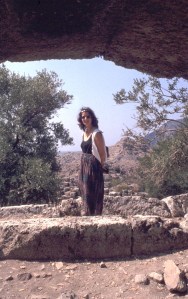
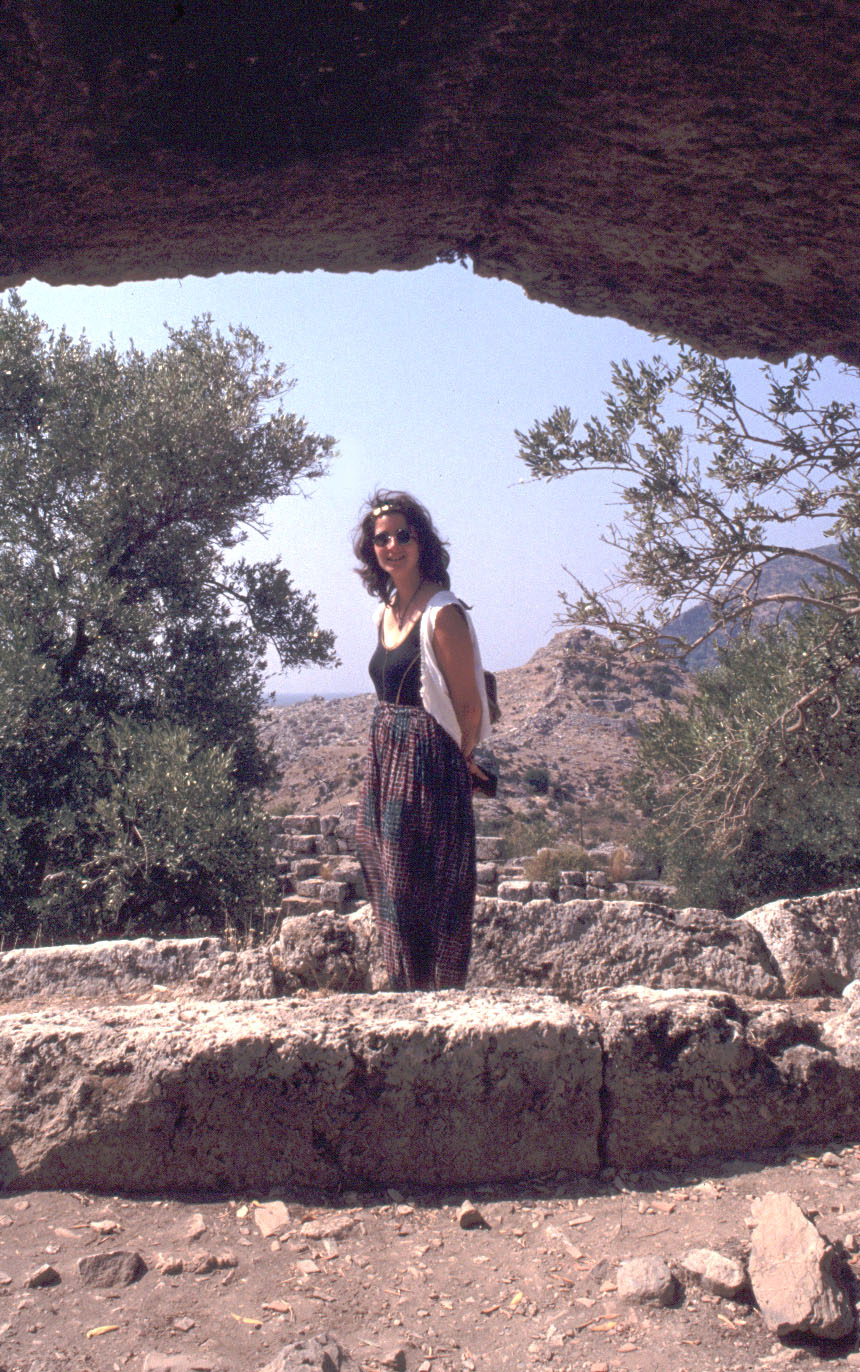
On holiday in Turkey, aged 16. How cool am I? I wish I had some Glastonbury photos from 1993 but I seem to have lost them!

On holiday in Turkey, aged 16. How cool am I? I wish I had some Glastonbury photos from 1993 but I seem to have lost them!

Toolkit for overcoming bullying – things I wish I’d known at the time but probably helped me through. This is written as if I was advising myself at the age of thirteen!

  • Be proud of who you are. Whoever you are, you are not a freak. There’s nothing “wrong” with you.
  • Don’t be afraid of being alone sometimes. Make the most of your time. Read a book, play a game, daydream, write, learn an instrument.
  • Don’t conform to fit in. Be proud of the music you like and your hobbies. That will make you a million times cooler than the bullies.
  • Don’t be afraid. Hold your head up high. Pretend you can’t hear the things the bullies are saying about you. Failing that, think of some put-downs and say them calmly, without sounding angry or upset.
  • Tell your teachers and your parents about bullying, and they’ll help. But the biggest struggle is actually with yourself. You need to start believing that you’re an amazing person and you can achieve great things.
  • Start doing great things: write songs and perform them in public; volunteer for interesting things that take your fancy! Don’t hide in the corner – follow your dreams!
  • Be patient. Great friends are just waiting around the corner. You’ll find your soulmates – eventually, you’ll have a whole circle of friends who are really cool, amazing people!
  • And just remember that bullies are really insecure people who get their kicks from making others feel small. Sometimes they come to their senses and change their ways. Don’t give them the satisfaction of letting them make you unhappy.
  • Making yourself happy is the best antidote to bullying!

Psychedelic cows and proper chips – memory and food

I wrote the first draft of this piece in the memoir writing taster course which I held on Thursday 23rd May at the Quaker Meeting House, Sheffield. It was a privilege to meet the amazing ladies who participated and the writing exercises definitely helped people (including me) to delve into their most precious memories. The course has also enabled me to build links with bereavement charity Your Good Mourning, which has a shop here in Walkley, Sheffield.

There’s still room on the second “Open Your Memory Box” taster course, on Thursday 30th May, from 1-4pm at the Quaker Meeting House. Email me at anne.grange77@googlemail.com or call 07815966874 for more details!

Nanny and Gardan - with a very little me!

Nanny and Gardan – with a very little me!

Psychedelic cows and proper chips

My mum wouldn’t allow fancy biscuits in the house. Just plain digestives, to be nibbled with a glass of milk in the evening or spread with margarine and jam for a special treat. Mum knew that any other kind of biscuit would get instantly demolished by my dad – and me, given half a chance. She wasn’t mean – mum was constantly cooking and baking, but as a 1970s wholefood enthusiast, mum distrusted foods that were ready made. This was long before it was fashionable to make your own cakes, smoothies and pizzas. When I went round to other people’s houses for tea, I was invariably served the standard kids’ diet of the time – rubbery burgers, instant mash, baked beans and fish fingers. Mum’s cooking was always delicious and cooked from scratch, unless we were camping and got to have stewing steak in cans, tinned green beans and canned carrots – my favourite! Mum took cookery classes and learned to cook vegetarian meals, exotic curries and stir-fries and was well ahead of the times in terms of food, encouraging me to help out in the kitchen.

In a memory probably shared with lots of people from my generation with slightly alternative parents, I remember helping mum to drag big bags of lentils and kidney beans back from the wholefood cooperative in Kendal in a tartan shopping trolley.

When I went to visit my maternal grandparents, I had the opportunity to gorge myself on sweets, chocolate and slabs of jaw-breaking toffee that my Gardan (our family name for Grandad!) broke up with a hammer in the kitchen. Visiting Nanny and Gardan in Nottingham was always an occasion for a feast. Nanny was also a great cook and her baking was feather-light, even her rock-cakes. Their house was always warm and comfortable; a place where you could curl up on the sofa next to the cat, with the comforting smell of pipe tobacco and freshly cooked chips. The chips were cut by hand and cooked in a proper chip pan to perfect crispness – something else we weren’t allowed at home – we were only allowed oven chips. Nanny and Gardan both grew up in slum conditions in the 1920s; in large families where TB was rife and the kids had no shoes. But together, they were determined to give their own children the best possible chances in life, encouraging reading and learning. A big part of the comfort they provided came from food. Gardan’s vegetable patch in the back garden yielded potatoes, Brussells sprouts and in August, a seemingly unending supply of plump, juicy blackberries for pies and crumbles.

The cooking was very traditional – garlic was “foreign muck”, even though they eventually ventured on holiday to France and Spain. At Nanny and Gardan’s, I was allowed to eat white bread, delicious with melted butter, dipped in the bright yellow yolk of a boiled egg.

The year after Nanny died, I went to university in Sheffield. Gardan gave me plates, cutlery and various kitchen appliances to take with me. I loved the steak plates (although I was a vegetarian by this stage) with psychedelic cows on them and the floral tea plates. It was like taking a piece of that comforting home with me as I embarked on my new, independent life. Eighteen years later, a few of these items have survived, but they are dwindling. I was gutted to chip one of the floral plates the other day. The ancient Moulinex whisk valiantly mixed my first Christmas cake two years ago, then died in a puff of acrid smoke, just as I was lining the tin. Gardan died in 2001, so these everyday objects and a few other items, are all I have to remind me of my wonderful grandparents. At least I can conjure them up with memories and words.

Welcome to Wild Rosemary Writing Services!

Hello!

I’m Anne Grange. I’m a writer based in Sheffield.

Wild Rosemary is my writing business. I’m specialising in helping people to write memoirs and biographies.

I thought carefully about my business name. As a herb, Rosemary is said to improve the memory. It symbolises remembrance and in Hamlet, Ophelia says “there’s rosemary, that’s for remembrance”. I thought it was very apt, with a literary ring to it! My middle name is Rosemary too. It’s time my name came in useful.

The “Wild” part is because I’m now freelance. And who doesn’t like a bit of wildness, whether it’s re-living crazy, carefree days, a day spent in the countryside? Today has been quite wild:  a spring day today with the leaves and flowers finally coming to life in the bright sunshine; ungainly bumble bees bumping into people. Then the wind would gust and the sky would turn dark grey. But the sun won the fight in the end.

Find out more about the Memory Box Memoir Writing taster courses I’m teaching on Thursday 23rd and 30th May at the Quaker Meeting House in Sheffield. The courses will help you to tell your story, no matter what stage you’re at or how confident you are with writing. Click on the News and Events page for more details.

I look forward to hearing from you soon.

Lots of love,

Anne xxx

It's Spring! Time to start writing!

It’s Spring! Time to start writing!