
Every year at Christmas, my Nan (known as Nanny but this gets confusing for posh people – I mean my grandmother of course!) made delicious stuffing. It was baked in an oven dish – not actually stuffed inside anything, so I carried on eating it, even after I became a vegetarian.As a child, stuffing was part of my grandparent’s loving world – so much love and contentment made out of stale bread.
Nanny was a very traditional cook, rooted in Nottingham. The most exotic thing she ate was gammon and pineapple, and she was always very suspicious of garlic – but her cooking was always delicious and a link back to older, poorer times, when there could be no waste. Nan’s portions were always magnificent – offered out of generosity and gratitude, when during her childhood, her stomach must have often been empty.
My mum carried on the tradition, and the smell of sage always filled my nose on Christmas eve as she soaked the breadcrumbs. The stuffing would come out of the oven, moist in the middle but crispy on the edges – an essential part of a festive dinner. But the best bit was the next day, when the stuffing had solidified so much it could be sliced and was a great sandwich filling to take on walks between Christmas and new year, especially with a spoonful of cranberry sauce. Even though it’s essentially a bread sandwich – don’t let that put you off.
Eventually, I started hosting Christmas myself, and I asked Mum for the recipe. She shrugged and said that there wasn’t really a recipe. There wasn’t really very much to it – just onions or leek, sage and a huge pile or breadcrumbs, usually cheap white rolls. We were very much a wholemeal Hovis sort of family, but Mum said that the white bread soaked up the flavour better.
So I made my own version, adding my own twenty-first century vegan (try it with nutritional yeast flakes added to the mix) and Sheffield twists (a dash of Henderson’s relish!). There are no quantities – this is pure guesswork. This year, in the strange Covid 19 Christmas of 2020, I made it again, just for myself. I could carry on making it through the year, but somehow, I don’t. It’s as if my family stuffing can only be made at Christmas, even though it would be good with a Sunday dinner at any time of the year!
So, here it is. My own version. Please try it, especially if you only know those dry round stuffing balls that you make up out of a packet. Those packets look cheap but basically, you are paying a lot for a tiny amount of breadcrumbs and dried onion and herbs. Much better with the real thing – and remember that the stuffing is there to stuff you, designed as a thrifty way of filling your plate and making the more expensive stuff go further. And don’t forget the gravy!
- Use one large leek or onion – or both if you are making a larger amount – chopped up and sauteed in a generous amount of olive oil. Add a couple of cloves of garlic. Keep the heat low to medium, so the leek/onion becomes translucent and soft.
- Add herbs, seasoning and maybe some spices. The more herbs the better. I have fresh sage growing in my garden. I used the sage leaves I’d grown from seed this year, but I think it needed more. I should have raided the older sage bush but it was chucking down with rain when I made this the day before Christmas eve, and I thought I had enough. But if you think you have enough, always add a bit more sage.
- Shred your bread. I’ve used the food processor to make breadcrumbs for stuffing, but I think larger chunks are better – just rip the bread into small shreds with your hands and put it in a large bowl. This is quite cathartic. I think it makes the texture of the stuffing softer. This year, I had about half a loaf of Tesco’s seeded batch. I usually freeze bread for sandwiches, but I put this one in the freezer slightly squashed and I couldn’t separate the slices without mangling them! So a bit of a departure from the usual white cobs (East Midlands word for bread rolls).
- Stir the breadcrumbs into the leek/onion mixture, along with a crumbled stock cube (I used an OXO vegetarian stock cube) or a couple of teaspoons of vegetable bouillon.
- Add enough boiling water to soak the bread and create a mush. I know that’s not the most appetising word, but neither is moist, apparently! What you’re going for is soggy, but not too soggy. Now is a good time to add more seasoning if you don’t think you’ve added enough. If in doubt, leave the kitchen and come back in. Your nose should be hit by a lovely sagey aroma.
- Spoon the mixture into a shallow, greased oven-proof dish. It doesn’t really matter what it is, but ideally, it should only be a couple of inches / about five centimeters deep – you don’t want your stuffing to become unstable. Drizzle (or pour) olive oil on the top. You can use sunflower oil or dot with marg. I like olive oil though. It’ll probably be really expensive after Brexit. Thanks for that. Nanny probably used lard!
- Cook for around thirty minutes at about 200 degrees centigrade. If in doubt, just bung it into a hot oven while your vegetables are roasting and your main dish is cooking.
- Eat it! Straight from the oven, it will have a crisp shell on top and will be slightly molten underneath. It will go perfectly with the rest of your Christmas dinner.
- Allow the leftovers to cool and put them in the fridge. Slice up cold to put in sandwiches (or cobs) or heat up to go with your delicious leftover meals. Bubble and squeak is also one of my favourites (fried up mashed potato with leftover sprouts/cabbage), but that’s another story.
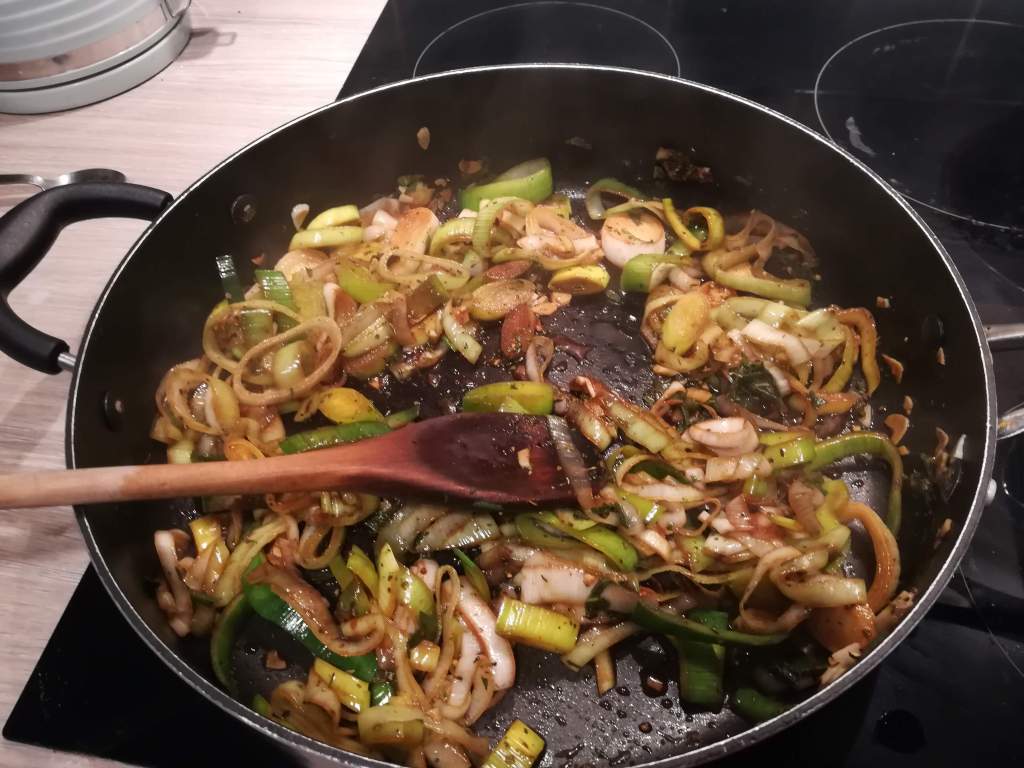
Sautee the leek /onion gently in lots of olive oil – add herbs and seasoning. 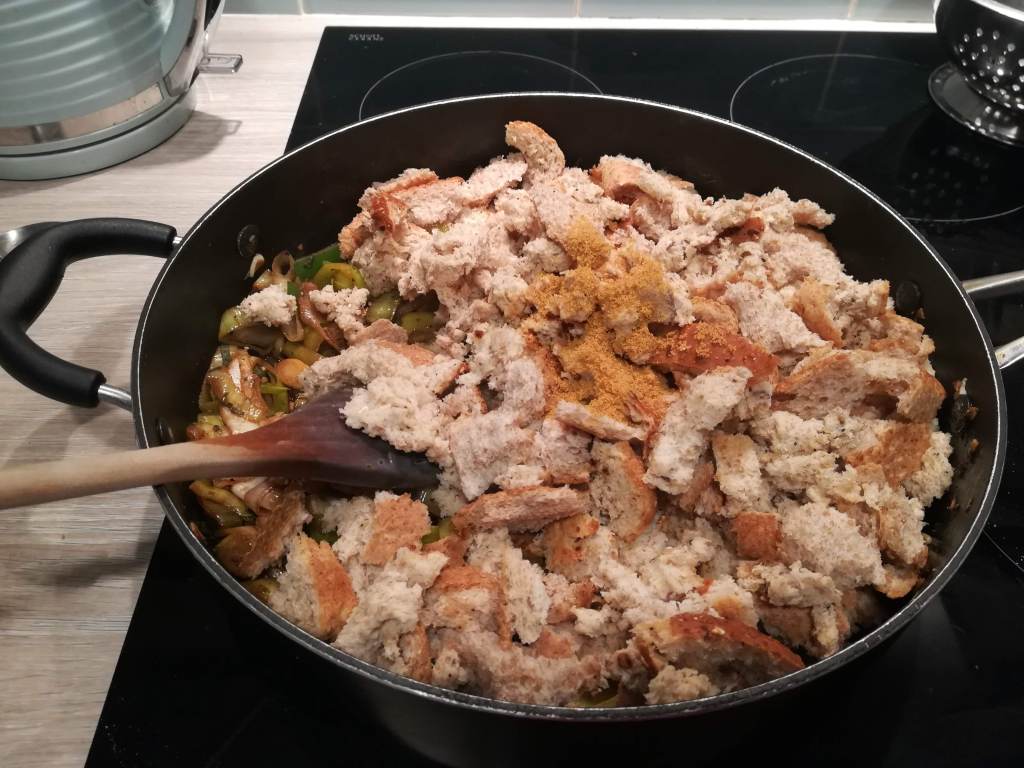
Add the shredded breadcrumbs and crumbled stock cube. 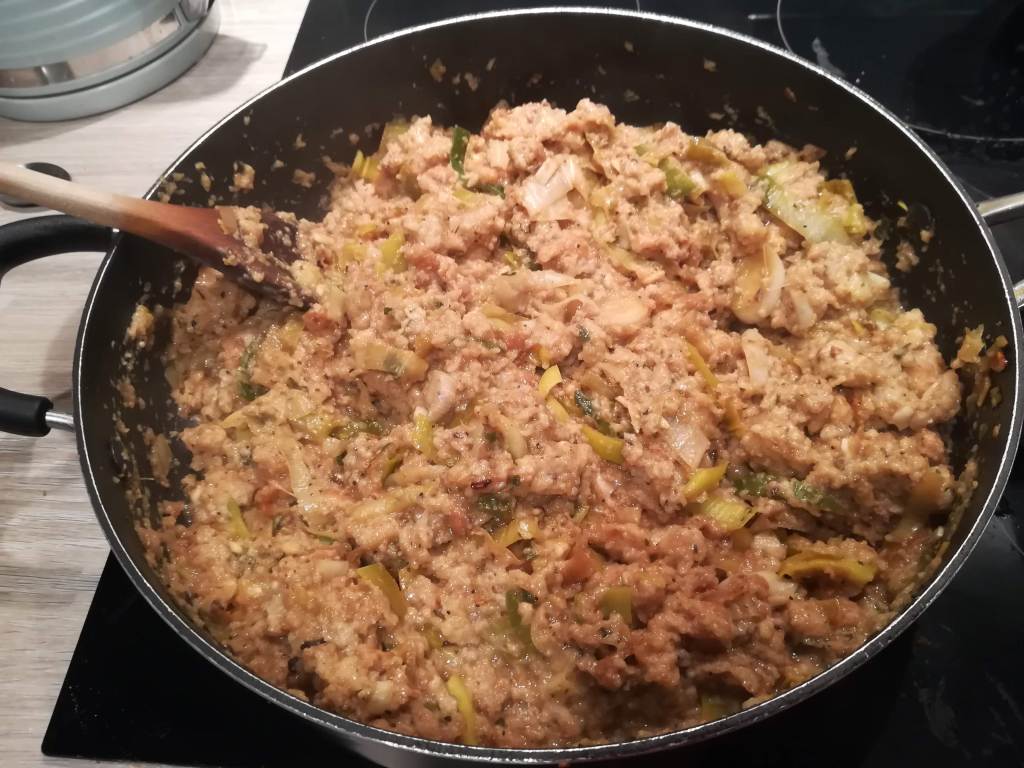
Add boiling water and mix until mushy (in the nicest possible way!) 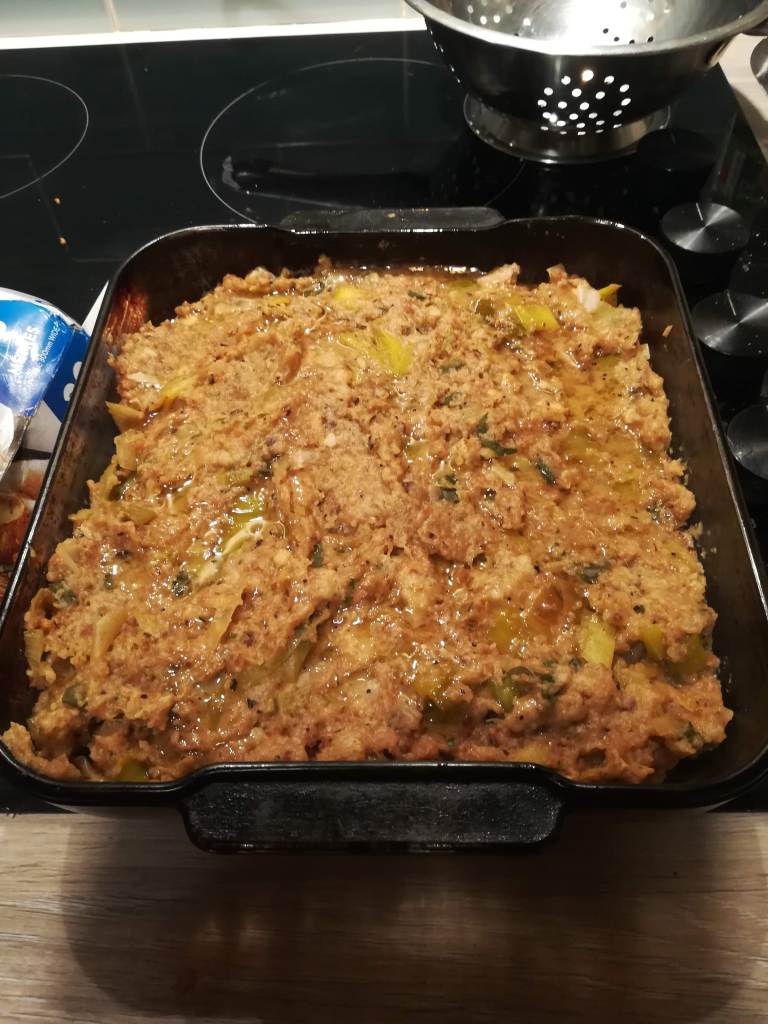
Spoon mixture into a shallow ovenproof dish and bake in a hot oven. 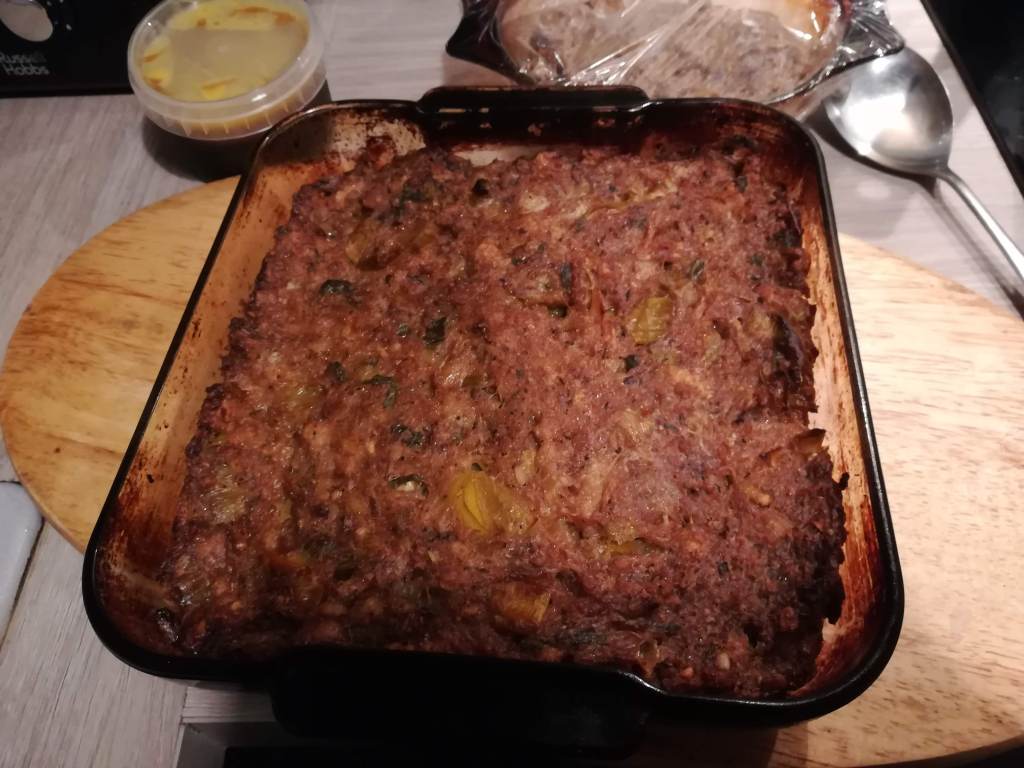
Crispy on the top, molten in the middle! 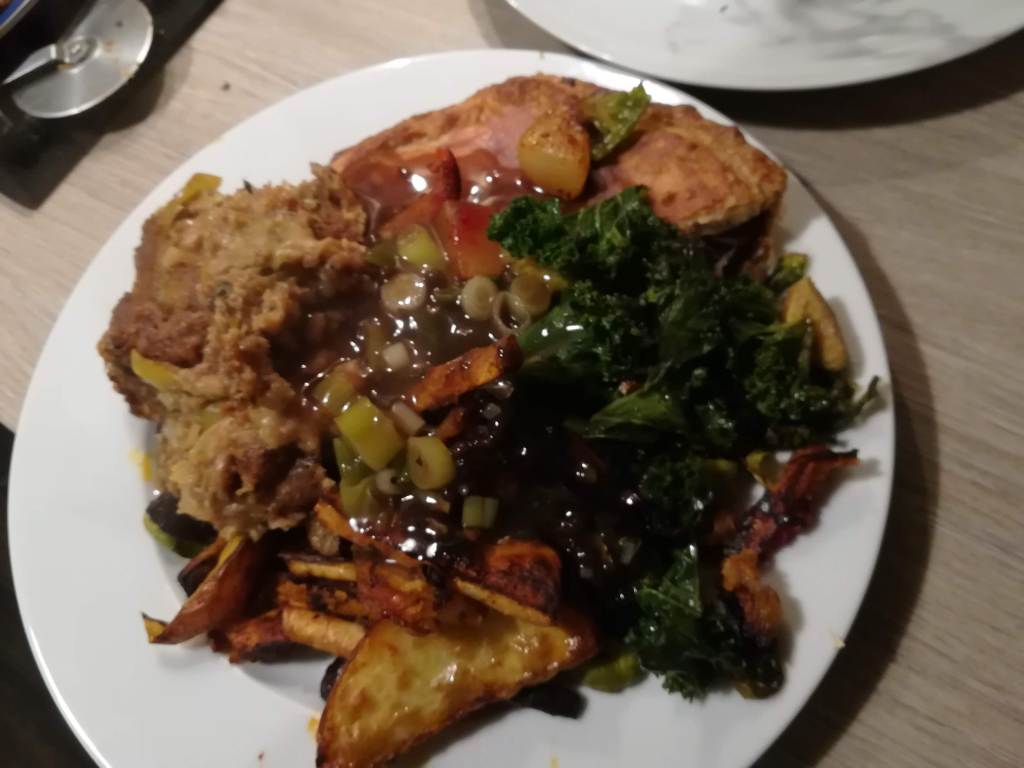
Perfect with a plate of roast vegetables, stirfried greens and gravy (and a mushroom and chestnut pie!) 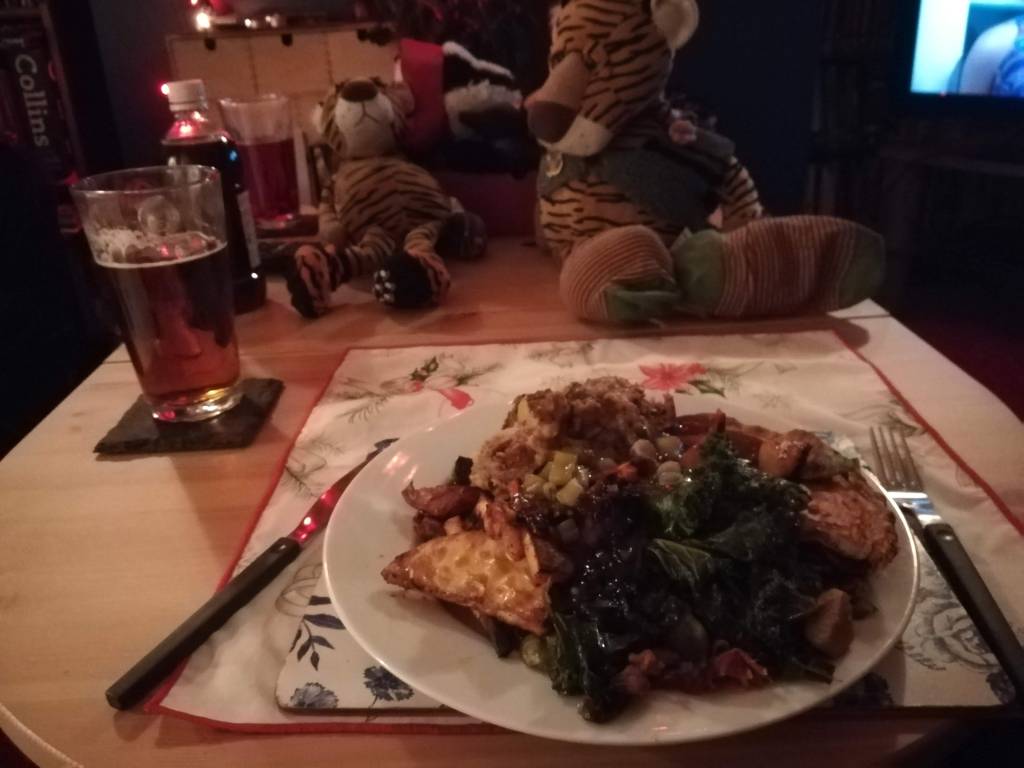
Christmas dinner, 2020 style!
 Anne Grange Writing
ha ha, I had mushroom and chestnut pie too! But wish I’d had your stuffing recipe as the “vegan stuffing balls” proudly sourced by my husband were pretty grim. Lovely nostalgic, kitchen-scented piece! XX
On Tue, 29 Dec 2020 at 17:53, Anne Grange Writing wrote:
> Anne Garage posted: ” Every year at Christmas, my Nan (known as Nanny but > this gets confusing for posh people – I mean my grandmother of course!) > made delicious stuffing. It was baked in an oven dish – not actually > stuffed inside anything, so I carried on eating it, even afte” >